Modern industrial automation runs on precision, speed, and reliability. And at the core of just about every automated system you can think of — from assembly lines and packaging machines to hydraulic presses and textile equipment — you’ll find two unsung heroes doing the heavy lifting: electromagnets and solenoid valves. These compact electromechanical components turn electrical signals into controlled linear or rotary motion, making possible the precise, repeatable, high-speed operations that define modern manufacturing.
For any industrial solenoid valve manufacturer or custom solenoid manufacturer, the automation sector is one of the highest-demand application areas out there. In this article, we’ll take a close look at how custom solenoids and solenoid valves actually work inside automated equipment, walk through the key things you need to consider when picking one, and walk through four real-world case studies that show measurable impact across different industries.
If you’re hunting for a China solenoid valve manufacturer for your automation equipment OEM project, or need solenoid OEM ODM services, Cixin Industrial’s got 10+ years of experience supplying custom solenoid valves to factories and machine builders worldwide.
—
## How Electromagnets and Solenoid Valves Power Automation
Electromagnets in Automation Equipment
An electromagnet — here’s the thing — generates a magnetic field whenever electrical current flows through a coil winding. In automation machinery, they’re deployed in a few key ways:
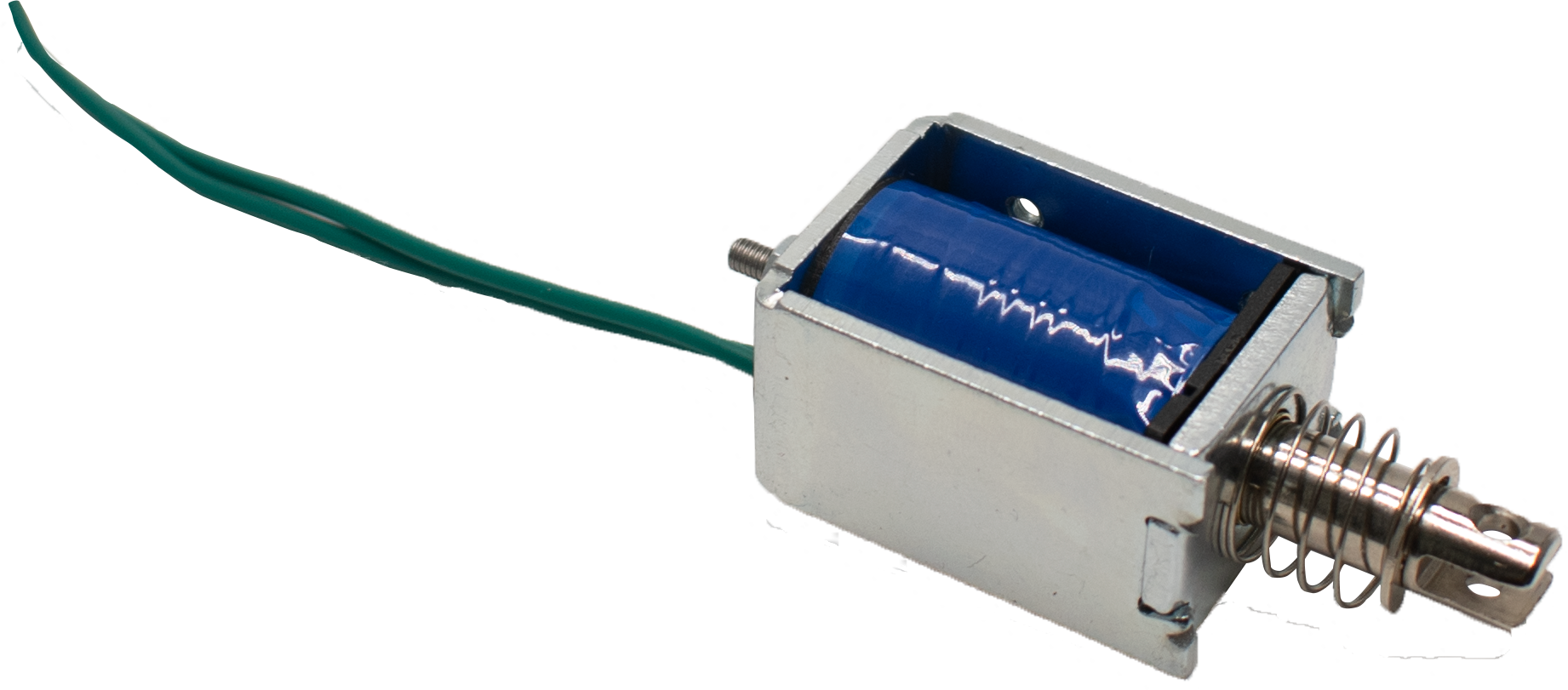
- Push-pull solenoids: Linear push or pull mechanisms in clamping, sorting, and ejection systems — the most common solenoid for automation applications
- Rotary solenoids: Angular motion for indexing, positioning, and rotational locking in packaging and assembly equipment
- Bistable solenoids: Two-position devices that hold position without continuous power — ideal for battery-powered or energy-saving automation systems
- Holding magnets: Zero-power retention of ferromagnetic workpieces or safety door interlocks
- Braking solenoids: Rapid engagement/release in conveyor stop and emergency brake circuits
What makes industrial solenoids so well-suited to automation is their near-instant PLC-controlled response (usually in the 10–100ms range), incredibly high cycle rates (up to millions of cycles), and how straightforward they are to integrate with PLCs and microcontrollers.
Solenoid Valves in Automation Equipment
A solenoid valve pairs an electromagnet with a valve body — when energized, the magnet shifts a plunger to open, close, or proportion a fluid (air, water, oil, gas) passage. They’re the backbone of pneumatic automation and hydraulic control systems across just about every manufacturing sector:
- 2-way / 3-way / 4-way directional valves for circuit routing
- NC (normally closed) or NO (normally open) spring-return types for fail-safe circuits
- Direct-acting solenoid valves (24V DC, 12V DC) for fast response in packaging and medical automation
- Pilot-operated solenoid valves (brass, stainless steel) for high-flow hydraulic press and industrial machinery
- Proportional solenoid valves for variable flow control in textile tensioning and precision dosing
Cixin Industrial, as an experienced solenoid valve supplier, produces all the major types — 24V solenoid valves, 12V solenoid valves, push-pull solenoids, rotary solenoids, and bistable solenoids — with full solenoid OEM ODM customization available.
—
## Key Selection Criteria for Automation Applications
Choosing the right custom solenoid or solenoid valve for automated equipment isn’t as simple as picking one off a shelf — you need to balance technical parameters against your specific machine requirements:
| Parameter | Key Consideration |
|---|---|
| Actuation force / pressure rating | Must exceed maximum load with adequate safety margin — specify for peak, not average |
| Voltage & power | Common options: 12V DC, 24V DC, 110V AC, 220V AC — match your PLC output architecture |
| Stroke length | Determines plunger travel — affects coil winding density and force curve |
| Response time | Direct-acting: 5–20ms. Pilot-operated: 20–80ms. Critical for high-speed capping, indexing, and sorting |
| Duty cycle | Continuous (100%) vs. intermittent (25–50%) — affects coil heat buildup and lifespan |
| Valve body material | Brass (standard), stainless steel (corrosive media), PTFE (food-grade / chemical) |
| Environmental rating | IP65–IP69K for washdown; ATEX/IECEx for explosive atmospheres |
| Customization | Mounting interface, port size, lead wire length, connector type — key differentiator of a true solenoid factory |
Cixin Industrial, as a custom solenoid manufacturer, specializes in tailoring all of these parameters to specific automation machine requirements. Their solenoid OEM ODM service covers bespoke winding, mounting brackets, special materials, and rapid prototyping for tight machine development timelines.
—
## Case Study 1: ECU Assembly Line — Push-Pull Solenoid for Automotive Electronics Automation
Custom push-pull solenoids enable high-speed, precise actuation in ECU automotive electronics assembly automation equipment.
A Tier-1 automotive electronics supplier runs a high-speed ECU assembly line that cranks out Electronic Control Unit housings at 3,600 units per hour. Each housing needs four M3 screw insertions, followed by a torque verification step.
Challenge: The original pneumatic cylinder system struggled with inconsistent actuation force caused by air pressure fluctuation during peak shifts. The result? A 2.3% rejection rate from under-torqued fasteners — and that’s largely because they were using general-purpose pneumatic actuators instead of a custom solenoid matched to the actual load profile.
Solution: The engineering team swapped out the pneumatic cylinders for custom push-pull solenoids (24V DC, 80N holding force, 30mm stroke, IP65) purpose-built for direct PLC signal integration. A secondary 2-way NC solenoid valve (pilot-operated, brass body, 0–10 bar) handled the pneumatic press-fit of a locating pin, synchronized via PLC timing sequence.
Results:
- Rejection rate: 2.3% to 0.1%
- Cycle time: 1.1s to 0.8s per unit
- Zero pneumatic-related line stoppages in 6 months
- Annual savings: RMB 420,000
—
## Case Study 2: Beverage Bottling Line — Solenoid Valve for High-Speed Packaging Automation
Direct-acting solenoid valves control capping and pneumatic circuits in high-speed food and beverage packaging automation equipment.
A beverage bottling plant packages 24,000 PET bottles per hour across three production lines. The capping station was a real bottleneck, held back by the response speed of its original pneumatic actuators.
Challenge: A 15ms lag between the PLC signal and cap engagement meant roughly 0.5% of bottles were leaving the line without properly sealed caps — that’s about 120 compromised units every hour. At 24,000 bottles/hour, you’ve got a significant food safety risk and brand reputation concern on your hands.
Solution: Each capping head got retrofitted with a direct-acting 3-way solenoid valve (24V DC, push-type plunger, food-grade material) controlling a compact pneumatic actuator. This nixed the pilot delay that was baked into the previous design. Valves were installed on a DIN-rail manifold block with individual pilot lights and manual override buttons — which made fast isolation possible without shutting down the entire packaging automation line.
Results:
- Response time: 15ms to 4ms
- Seal failure rate: 0.5% to below 0.02%
- Wiring labor reduced by 60% via manifold mounting
- Valve replacement time: 45 minutes to 8 minutes
—
## Case Study 3: Hydraulic Metal Stamping Press — 4-Way Solenoid Valve for Industrial Machinery
High-speed 4-way solenoid valves manage hydraulic ram control in high-speed metal stamping industrial press machinery.
A metal stamping workshop in the Pearl River Delta runs a 200-ton hydraulic press that performs around 8,000 press cycles per day on HVAC precision brackets.
Challenge: A standard industrial solenoid valve with 40ms response time was causing bounce marks — those secondary impact marks from ram momentum — whenever cycle rates climbed above 40 strokes per minute. That 3.8% defect rate and the inability to push cycle speed higher were capping both quality and throughput.
Solution: They replaced it with a high-speed 4-way solenoid directional valve (24V DC, closed-center, snubber cushions, 8ms response). The faster response opened the door to a PLC-based closed-loop position control algorithm — cutting power to the electromagnet solenoid before bottom dead center, so the hydraulic dampening could achieve the exact final position. They also added an emergency stop solenoid (energized-to-release, fail-safe design) to meet CE machinery safety requirements.
Results:
- Bounce mark defect rate: 3.8% to 0%
- Maximum cycle rate: 40 to 55 strokes/minute
- Annual output increase: 18%
- Safety compliance: upgraded to EN ISO 12100
—
## Case Study 4: Warp Knitting Machine — Proportional Solenoid for Textile Automation Equipment
Proportional solenoids maintain yarn tension control in high-speed textile warp knitting automation machinery.
A textile manufacturer running 12 high-speed warp knitting machines (gauge E28, up to 2,000 rpm) was dealing with persistent yarn breakage — averaging 18 stoppages per 8-hour shift per machine.
Challenge: Fixed mechanical spring tensioners just couldn’t adapt to variations in yarn count, material (polyester vs. nylon), and environmental humidity. Yarn tension was fluctuating by as much as 40%, leading to inconsistent fabric quality and material waste across the textile automation line.
Solution: Each yarn feed spool was fitted with a proportional solenoid (12V DC, linear force proportional to current, 0–100% range) driven by a PWM signal from a dedicated tension controller. Load cells kept tabs on yarn tension and adjusted solenoid current 200 times per second — keeping tension within plus/minus 5% no matter the speed or material changes.
Results:
- Thread break rate: 18 to 2.5 per shift per machine
- Fabric strength consistency: improved by 34%
- Machine OEE: 71% to 89%
- Payback period: 4.2 months
—
## Conclusion: Partner with an Experienced Custom Solenoid Manufacturer
Whether it’s automotive electronics assembly, food packaging lines, metal stamping presses, or textile knitting machines — one thing rings true across the board: the gap between adequate and exceptional automation performance often comes down to whether you’ve got a custom solenoid or solenoid valve that’s been engineered precisely for that machine.
For automation equipment OEM builders and factory engineers, working with an experienced China solenoid valve manufacturer like Cixin Industrial opens the door to:
- Optimized force-to-power ratios — push-pull solenoids, rotary solenoids, and bistable solenoids designed for your specific duty cycle
- Full solenoid OEM ODM service — custom mounting, materials (brass, SS316, PTFE), voltage configurations, and IP ratings
- Rapid prototyping — 7–15 working days for custom solenoid valve samples
- Long-term supply consistency — stable 5–10 year supply for machines with extended service life
- Global logistics — serving automation equipment buyers and machine builders in 30+ countries
As industrial automation keeps pushing toward higher speeds, tighter tolerances, and smarter PLC-controlled systems, the electromagnet solenoid and solenoid valve remain foundational components — and honestly, the right custom solenoid manufacturer makes all the difference.
—
This article is produced by Cixin Industrial — a professional custom solenoid and solenoid valve manufacturer from Dongguan, China, with 10+ years of experience serving industrial automation equipment builders worldwide. Explore our full range of solenoid valves, push-pull solenoids, rotary solenoids, bistable solenoids, and proportional solenoid valves at cx-solenoid.com