

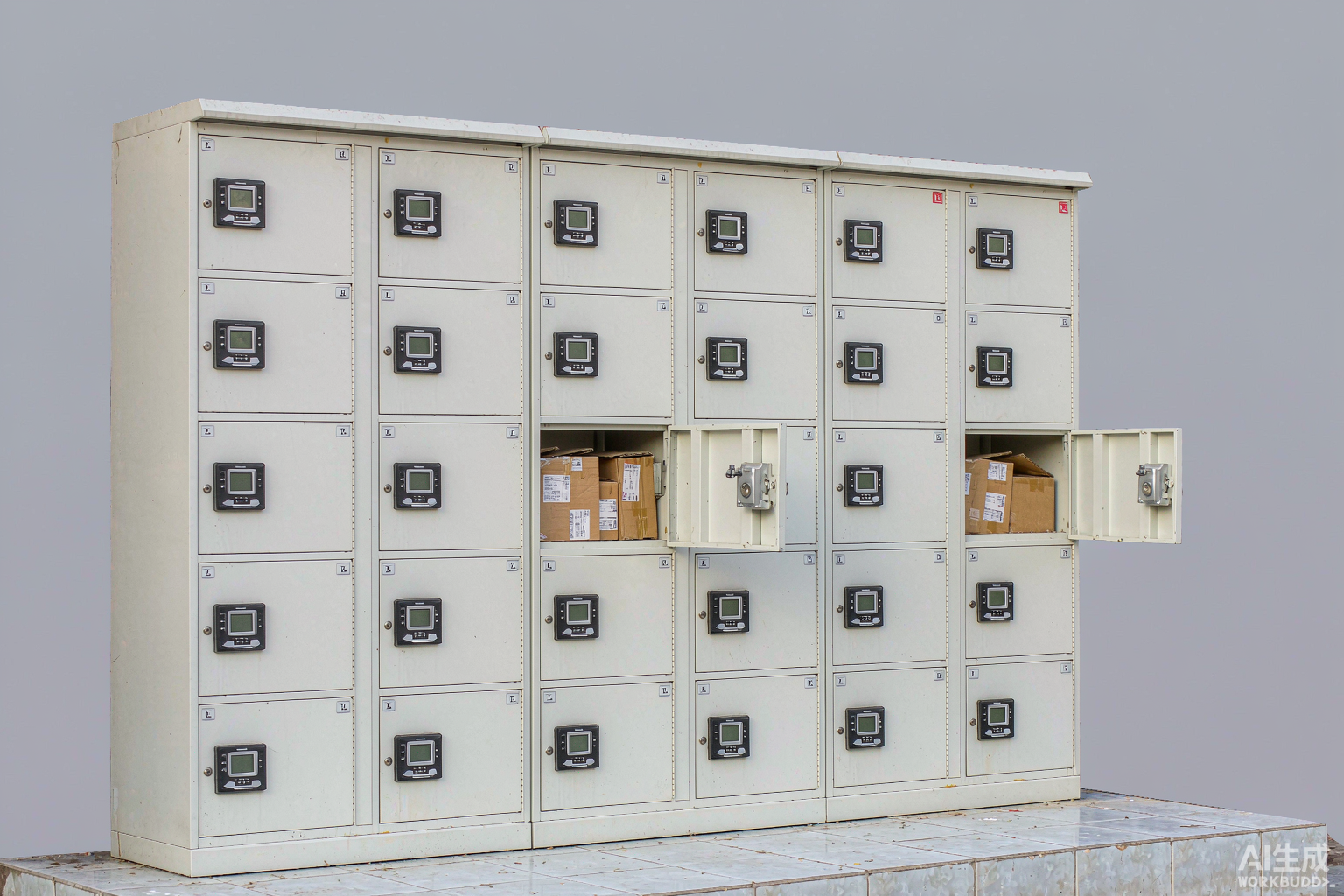
Smart lockers — parcel terminals, gym cabinets, tool cribs, fresh-food pickup stations — are today the highest-volume application of electromagnetic lock actuation. A single 60-door parcel terminal contains sixty latch solenoids, sixty door-state switches and a controller that must pop any door on demand, in any weather, on mains or battery power. We covered the system side in our article on electromagnets in parcel lockers and vending machines; this page focuses on the actuator itself.
The actuator specification, in turn, drives the bill of materials more than any other component in the door: latch force sets power supply sizing, pulse timing sets controller firmware, and cycle life sets the warranty period. Getting the solenoid right early prevents a cascade of downstream redesigns — which is why cabinet makers involve the actuator supplier at the platform stage, not after the sheet metal is cut.
How a Locker Latch Works
Most locker doors use a spring-loaded latch bolt that a small solenoid retracts for 300–500 ms when the user is authorized. The door swings open on its hinge or pops on its gasket, the user retrieves the parcel, and the latch re-snaps when the door closes. The actuator is a compact door lock solenoid: 12 V or 24 V DC, a few newtons of retract force, a 3–6 mm stroke, and a cycle life measured in hundreds of thousands of operations. Because the bolt only needs to move while the door is being pulled, the solenoid’s job is a short, decisive pulse — not continuous holding.
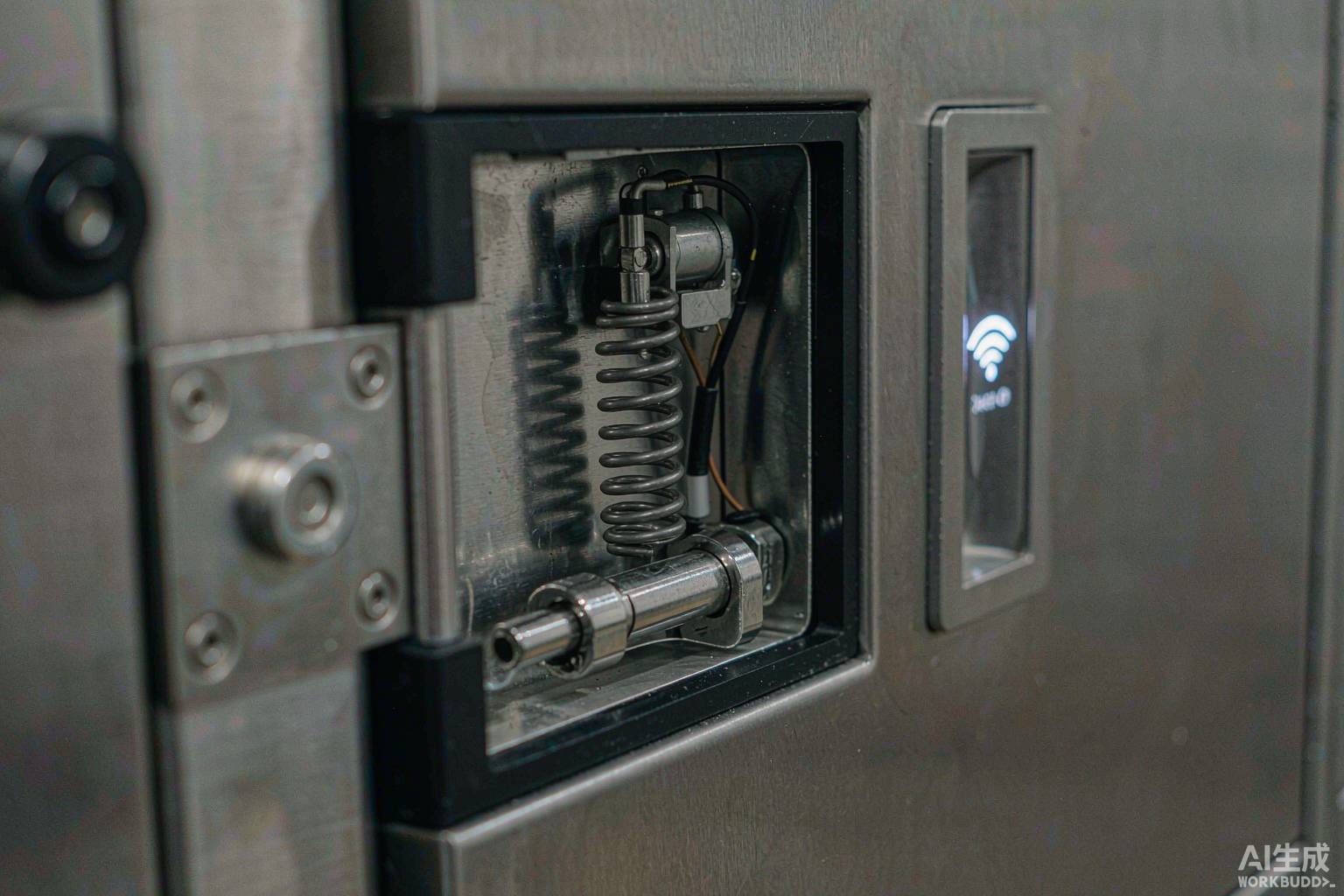
Geometry does most of the work. The solenoid only has to retract the bolt while the door is unloaded; once the user pulls the handle, the door’s own motion finishes the job. That division of labor lets a 5 W coil control a door a person cannot force open — the solenoid triggers, the mechanism holds. Choosing the bolt angle, spring rate and solenoid stroke together is what separates a latch that feels crisp from one that feels sluggish or sticks on humid days.
Monostable or Bistable: The Decision That Sets Cost and Battery Life
Monostable (standard) solenoids draw current only during the 400 ms unlock pulse, which makes them ideal for mains-powered parcel terminals where energy is free and every watt saved is a watt not spent on the power supply.
Bistable latching solenoids hold the door closed magnetically and consume power only to switch state. For battery-powered cabinets that may stand idle for weeks between users, this is the difference between a battery that lasts a season and one that lasts years. The engineering trade-offs — hold force, shock resistance, pulse timing — are compared in detail in our bistable vs standard solenoid guide.
Feedback, Safety and Failsafe Behavior
- Door-state feedback. A second micro-switch or Hall element reports whether the door is truly closed. Specifying the switch inside the solenoid assembly saves wiring and assembly time at the cabinet factory.
- Failsafe direction. Decide in advance what happens on power loss: most designs fail locked with a mechanical override, but food-bank and emergency cabinets may need fail-open behavior. The latch geometry, not the electronics, determines this.
- Anti-tamper. The latch must resist prying forces far beyond the solenoid’s own holding force; the cabinet frame, not the coil, provides final security.
Environment and Duty
Outdoor parcel lockers see condensation, dust and 40 °C+ enclosures in summer. Coils should be insulation class B or better, plunger guides must tolerate dust, and stainless or zinc-plated hardware prevents rust from jambing the latch. Because a locker may stand idle for days and then run a rush of cycles at the lunch peak, verify force at the worst-case cold start and hot enclosure — our guide to force, stroke and duty cycle walks through the method.
Duty pattern matters as much as climate. A terminal in an apartment lobby may serve 400 parcels in two evening hours and nothing else all day; a school cabinet runs bursts between periods. Design the power budget around the worst burst, not the daily average: simultaneous unlock pulses can momentarily double the supply load, and a coil marginally sized for the burst loses force exactly when the queue is longest.
Integration and Control
At the platform level, the latch is a network device: a controller checks which courier or user is authorized, energizes one solenoid for its 400 ms pulse, and watches the door switch to confirm the outcome. Firmware must handle the details that field experience surfaces — retrying a door that did not fully open, staggering pulses so a bank of doors cannot overload the power supply at once, and logging latch counts per door to schedule maintenance before failures happen, not after. None of this changes the solenoid itself, but it rewards an actuator whose pulse timing and force stay stable over life: predictable hardware makes predictable software.

Custom Latches for Cabinet Platforms
Door thickness, latch geometry and connector style differ across cabinet platforms, so most locker OEMs order customized latches: a wider bolt for double doors, a quieter damper for offices, a sealed coil for outdoor terminals, or an integrated feedback switch. Cixin Industrial builds custom solenoids for locker and cabinet manufacturers, with low MOQs for pilot runs and cycle-life testing on the complete latch assembly.
Need a solenoid sized for your mechanism? Talk to our engineering team about stroke, force, duty cycle and voltage before you freeze the layout.