
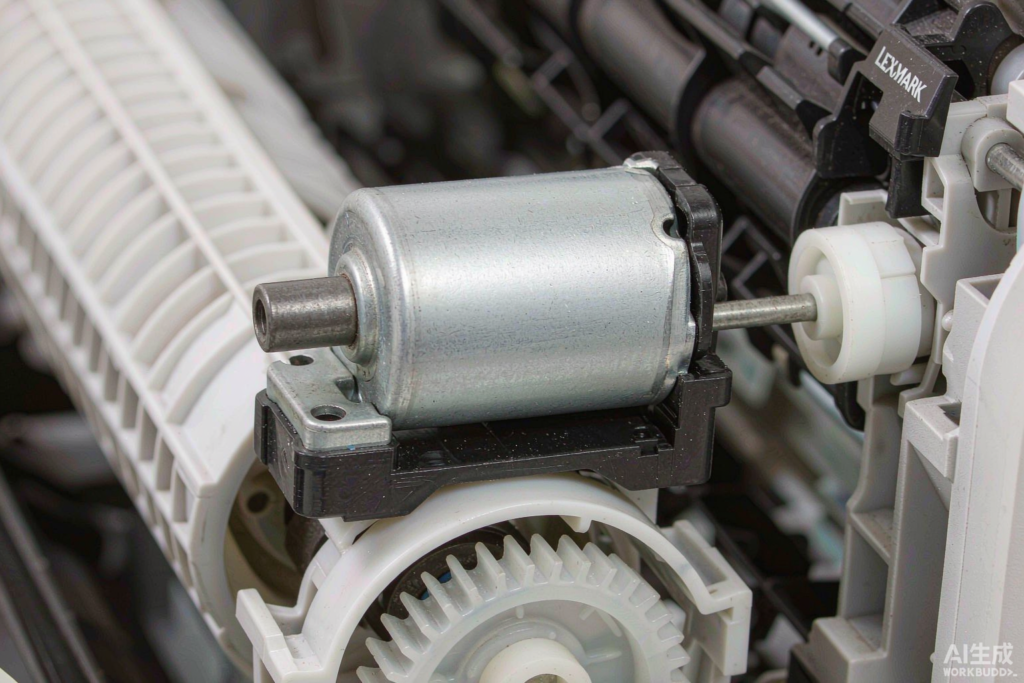
Open the service manual of almost any printer, copier, postage meter or document sorter and you will find the same component repeated throughout the mechanism: a small coil-and-plunger actuator performing one fast, short movement, over and over, for the life of the machine. Printers and office equipment are dense clusters of these movements — a desktop printer fires several electromagnetic actuators per page, and a mailing line may cycle a sorter solenoid tens of thousands of times per day.
Compared with motors, solenoids win in office equipment because the typical motion is binary: feed or stop, latch or release, divert or pass. When the motion is “move 5 mm and return within 30 milliseconds”, a solenoid is cheaper, smaller and far easier to control than any rotary alternative.
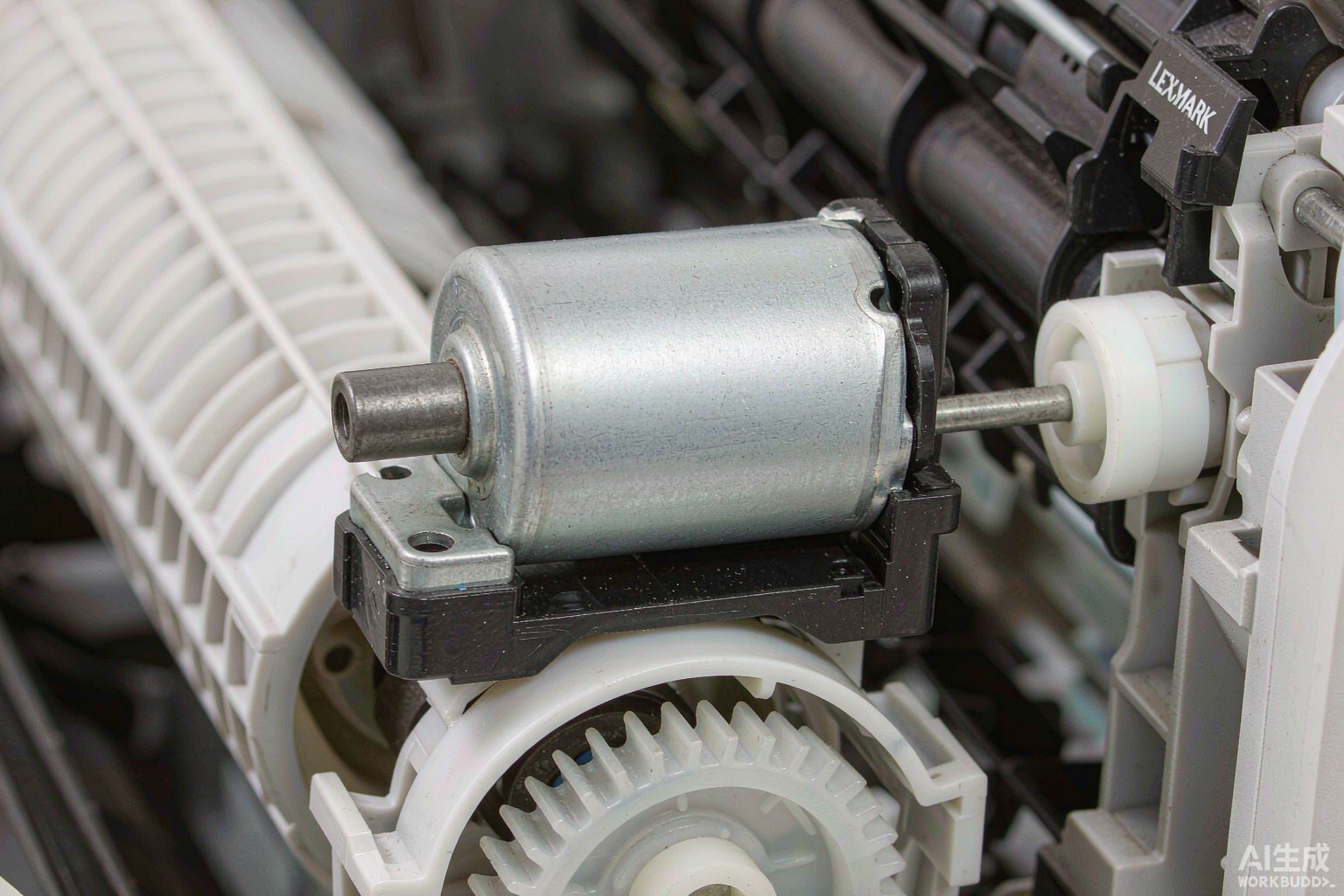
Why Office Machines Use Solenoids
- Millisecond response. Paper feed, ink capping and sorting all happen inside one machine cycle. A DC solenoid moves its plunger in 5–30 ms — fast enough to act between two roller passes.
- Short, precise strokes. Most office actions need 3–8 mm of travel and a few newtons of force, the natural working range of tubular and push-pull solenoids.
- Low cost at volume. A multi-function printer carries a dozen or more actuators; at production volumes a coil-and-plunger costs a fraction of any motorized alternative.
Paper Feed and Registration
The most critical actuator in any sheet-fed device is the feed solenoid. A push-pull solenoid kicks the clutch or feed roller that advances a single sheet, releasing within milliseconds so the next roller in the train takes over. The timing window is tight: release too early and the sheet skews or double-feeds; too late and print or stamp registration drifts. Designers therefore size these coils for pull-in time at the hot coil resistance, not the cold value — a machine that has been printing for an hour behaves differently from one straight out of the box, and a coil chosen on cold data will start missing cycles in the afternoon.
Registration solenoids repeat the same motion millions of times, which turns small specification details into life-or-death parameters. A plunger stop that wears a few tenths of a millimetre shifts pull-in timing; a coil sized on cold resistance misses its cycle once the machine reaches operating temperature; a return spring chosen too weak leaves the roller half-engaged on the next sheet. The fix is rarely a bigger solenoid — it is measuring the mechanism at its real worst case and leaving margin exactly there.
Ink Capping, Latches and Sorters
Inkjet heads park against a rubber capping station whenever the machine is idle, so the nozzles do not dry out. A small lever solenoid lifts the cap when printing resumes and lowers it at shutdown. Bistable (latching) coils are attractive here: a short pulse flips the cap and the coil draws no holding current during the long hours the printer sits idle.
Toner doors, paper trays and output stackers use electromagnetic latches that stay locked until the controller confirms it is safe to open — important on machines with hot fusers or fast-moving carriages.
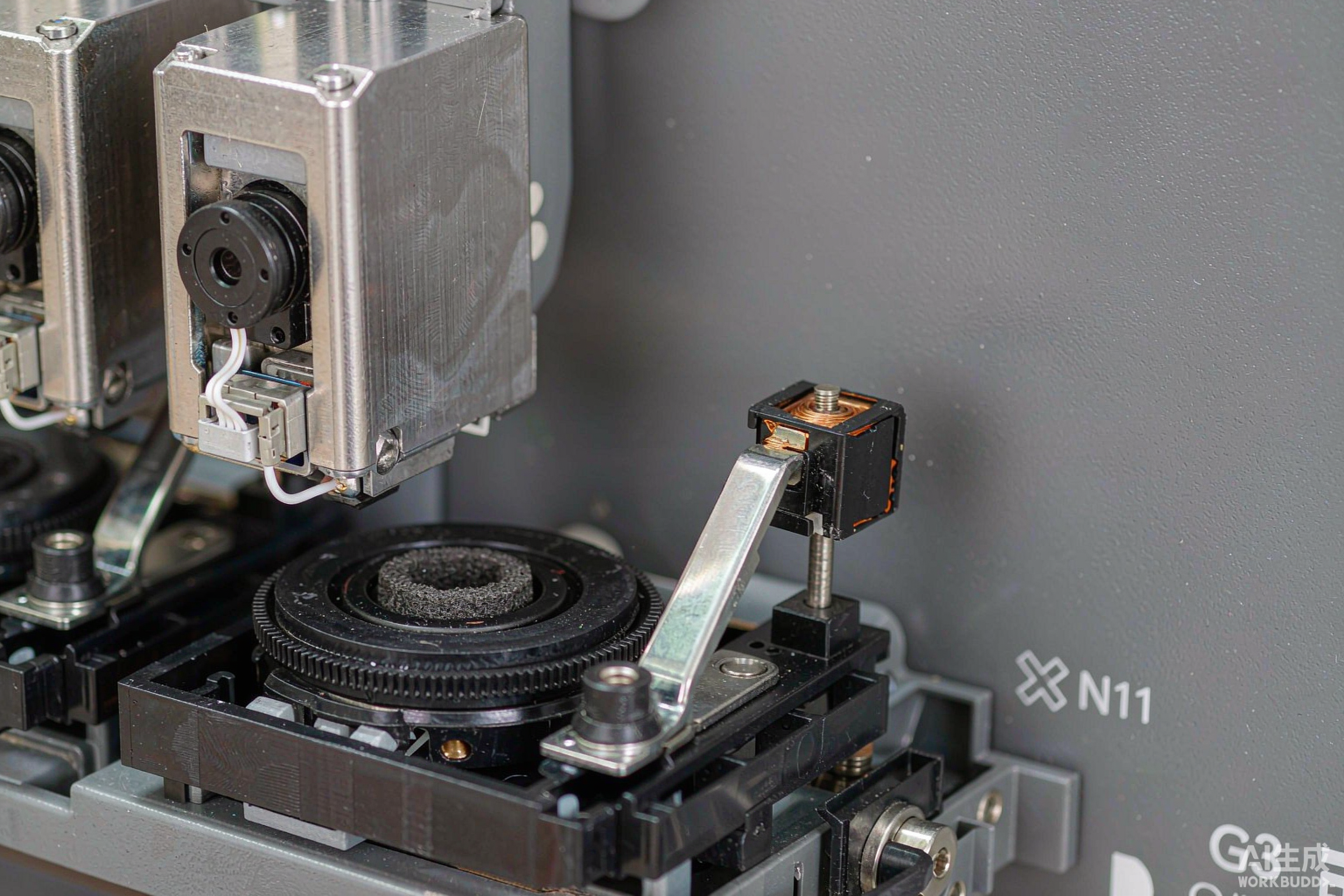
Sorting and mailing lines push cycle life hardest. A compact open-frame solenoid swings a diverter flap at line speed, routing each envelope to the correct bin; millions of operations are normal, so cycle life at real duty — not catalogue peak force — is the deciding specification.

Specifying Solenoids for the Office Environment
- Noise first. The actuator sits centimetres from the user. Target under 45 dB(A) with a rubber damper or a biased return spring instead of a hard mechanical stop.
- True duty cycle. Feed and capping coils work intermittently, but sorter coils may run near-continuously. Check the duty curve at your real ON/OFF ratio — our guide to force, stroke and duty cycle walks through the method.
- Voltage and heat. Office equipment runs 24 V DC, portable devices 12 V. Verify force at minimum supply voltage and maximum enclosure temperature.
- Idle power. Machines idle most of the day; bistable solenoids that hold position with a pulse cut standby draw dramatically — the trade-offs are compared in our bistable vs standard guide.
Common Failure Modes and How to Avoid Them
Field returns in office equipment cluster around three causes. Duty undersizing: a coil chosen on catalogue peak force runs hot, loses force as its resistance rises with temperature, and eventually burns out — the most common failure in sorter mechanisms that run near-continuously. Lint and dust: paper fibers pack against the plunger guide until the return stroke slows; open-frame actuators near the paper path need either a clean zone, a conformal-coated coil, or scheduled cleaning access in the service manual. Wear at the stop: millions of hard landings deform the plunger tip and change pull-in timing; a rubber damping washer or a spring-biased return extends life several fold. None of these are exotic problems — all of them are visible in a duty-cycle and environment check before the design is frozen.
Custom Variants for Printer OEMs
Print mechanisms almost always end up customized: a special plunger geometry for the cam it drives, a bracket that mates with the frame, an integrated damper, or a connector that fits the wiring harness. Cixin Industrial develops custom solenoids for printer and office OEMs, from prototype coils through volume production, with cycle-life testing at your real duty cycle.
Need a solenoid sized for your mechanism? Talk to our engineering team about stroke, force, duty cycle and voltage before you freeze the layout.