Textile machines are, at their core, repetitive-motion machines. A single embroidery head may trim thread thousands of times per hour; a knitting carriage may select needles millions of times over its life; a winding spindle may cut and re-tie yarn all shift long. For these fast, short-travel, high-cycle movements, the solenoid remains the most practical actuator on the market — simpler than a stepper, cheaper than a servo, and small enough to mount right where the thread flows.
In this guide we walk through the places where solenoids and electromagnets actually earn their keep in textile equipment, and what a design engineer should check before specifying one.
Why Textile Machinery Relies on Solenoids
Three characteristics make solenoids the default choice for textile automation:
- Millisecond response. Thread trimming, needle selection and knot catching happen inside a single machine cycle. A DC solenoid moves its plunger in 5–30 ms, fast enough to act mid-stitch.
- Short, precise strokes. Most textile actions need 3–10 mm of travel and a few newtons to a few tens of newtons of force — exactly the natural working range of tubular solenoids and open-frame designs.
- Low cost at scale. A multi-head embroidery machine carries dozens of actuators. At volume, a coil-and-plunger costs a fraction of any motorized alternative.
Embroidery Machines: Thread Trimming and Color Change
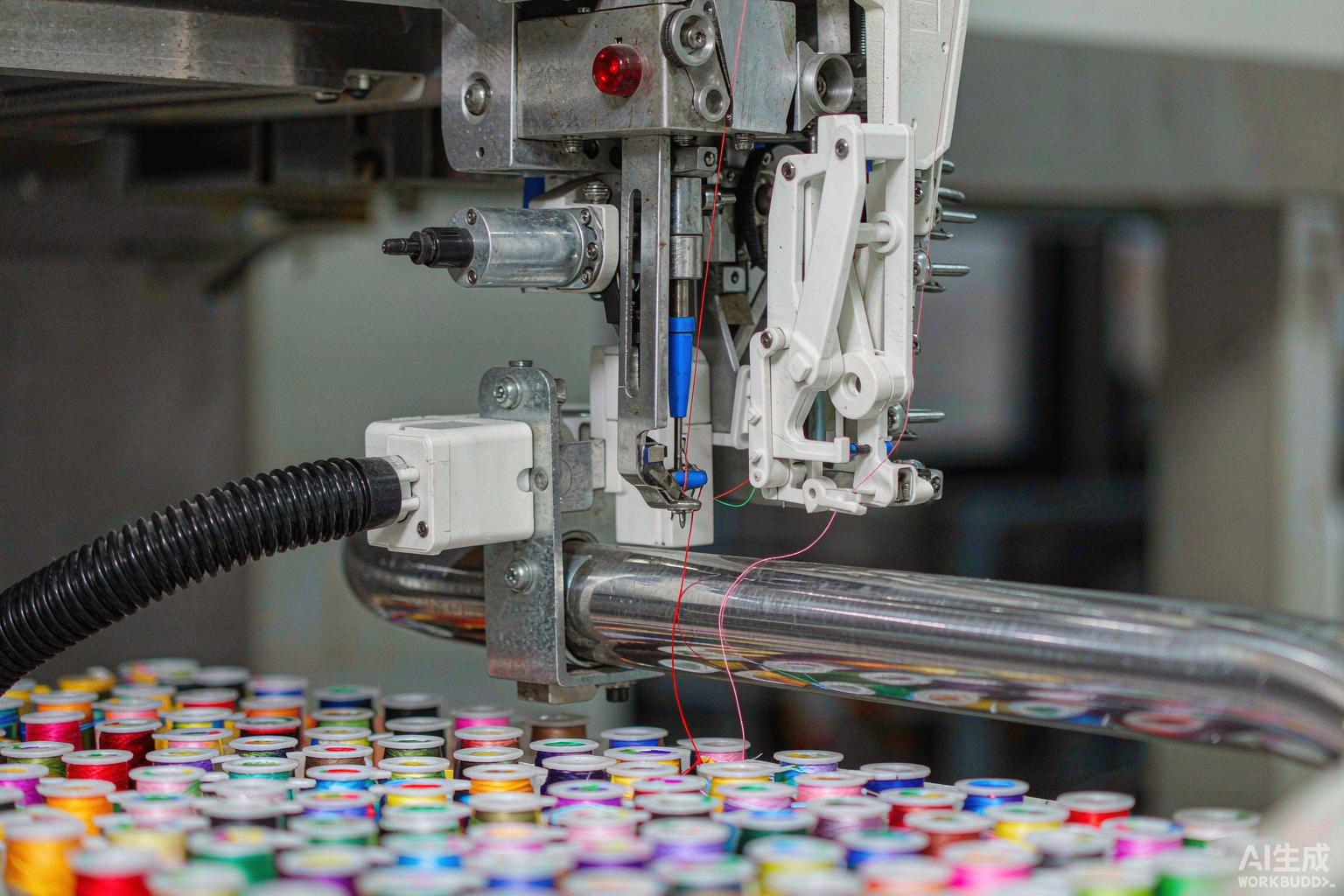
The classic application is thread trimming. A small tubular or push-pull solenoid snaps a moving-blade assembly across the thread path the moment the needle rises. The solenoid must deliver peak force in under 20 ms and then release, so these coils are typically rated for intermittent duty rather than continuous hold.
Color-change stations use a similar actuator to swing the thread guide or lift the catcher knife between pattern segments. Because the motion is quick and infrequent, a compact open-frame solenoid with a 5–8 mm stroke handles the job comfortably, and its 12 V or 24 V coil drops straight into the machine’s existing DC bus.
Knitting Machines: Needle Selection and Yarn Feeding
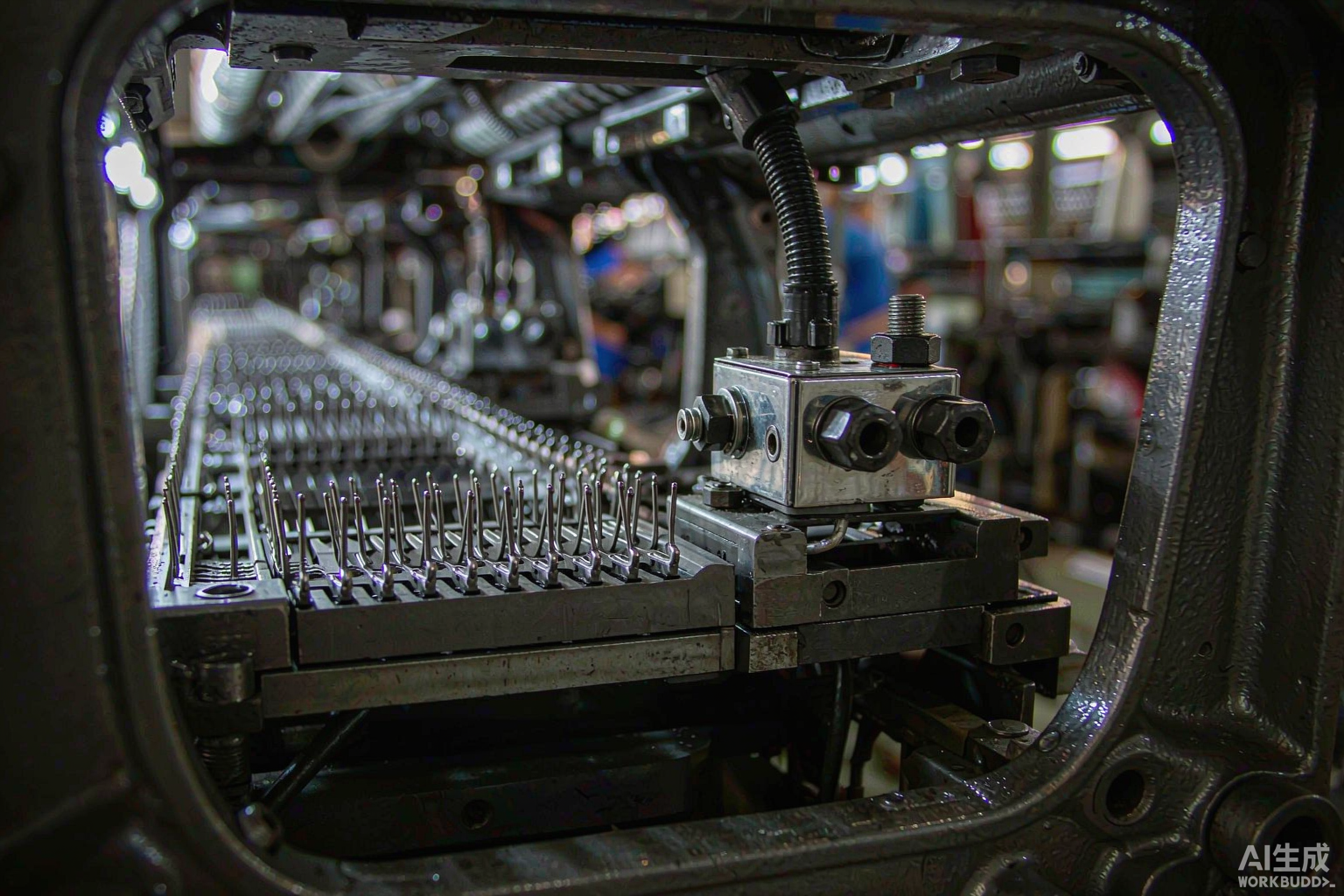
In electronic flat-bed and circular knitting machines, needle selection is done by a bank of tiny actuators that deflect selector jacks as the carriage passes. Speed is everything: each selection window is a few milliseconds, so designers choose low-mass plungers and stiff return springs, sometimes using bistable (latching) coils that hold position with a short pulse instead of continuous current.
Yarn feeding and braking also leans on electromagnets. An electromagnetic yarn brake modulates tension by attracting a disc against the yarn path — here a holding-type solenoid works continuously at low power, so coil heating and duty rating matter more than peak force.
Weaving and Looms: Weft Presentation and Warp Stop Motion
On rapier and projectile looms, solenoids present the weft package and actuate the filling-presenting finger at pick rate. Air-jet looms, which dominate modern weaving, use solenoid valves to fire the main and relay nozzles that carry the weft across the shed — each firing must open and close within milliseconds, pick after pick.
Looms also use electromagnets in warp stop motion and drop-wire detectors: when a warp thread breaks, a contactor drops and an electromagnetic or sensor circuit stops the loom instantly to prevent a fault being woven in.
Winding and Spinning: Cutters, Tensioners and Detectors
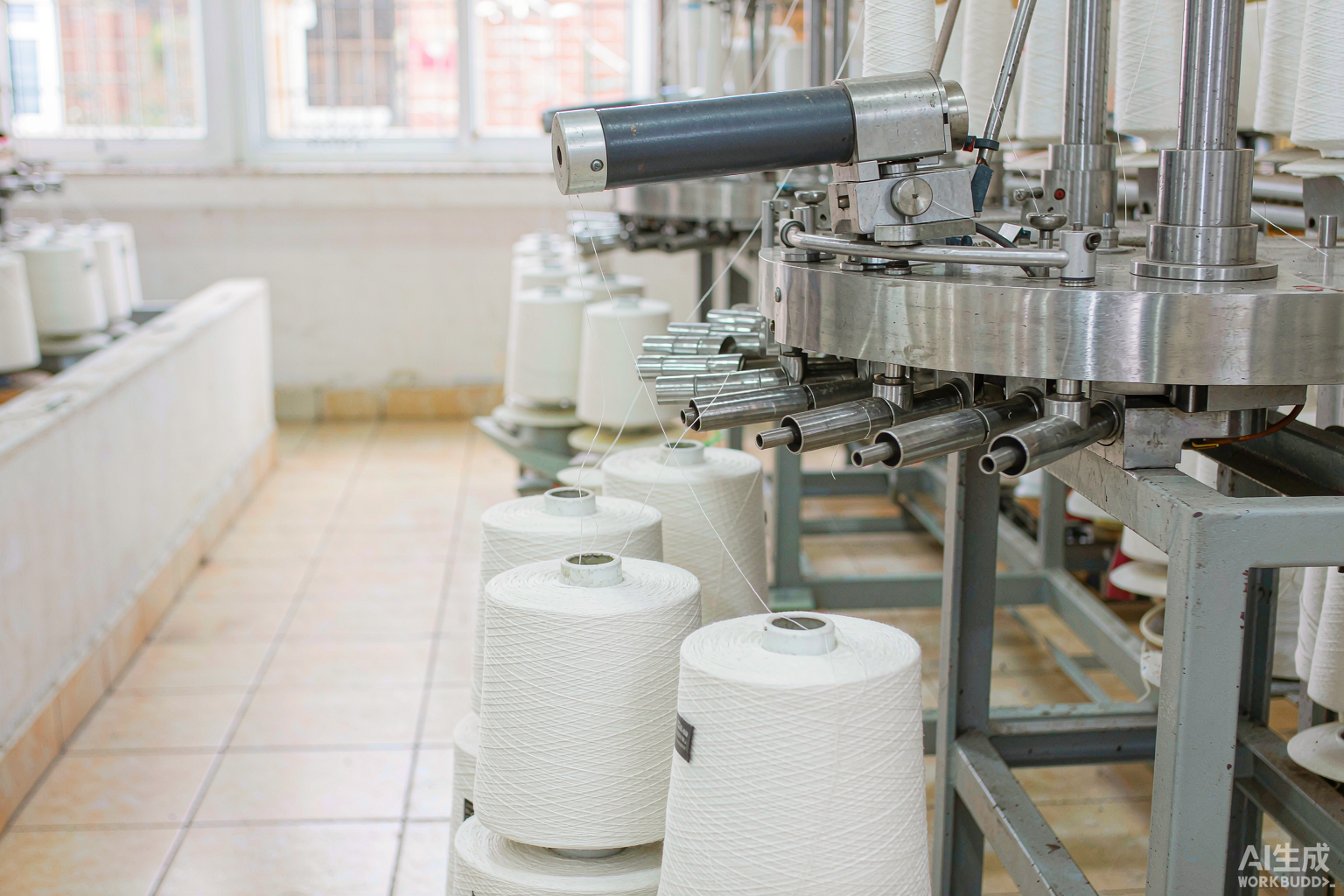
Automatic winders are perhaps the densest users of small solenoids. Every spindle can carry a yarn cutter, a knot-catcher and a tension arm, each a 2–5 W coil cycling continuously through a shift. In spinning preparation, electromagnetic sliver stop motion halts the machine the moment a sliver breaks.
The engineering challenge here is thermal: millions of cycles with short rest periods push the coil toward its duty limit. That is why reputable manufacturers publish a duty-cycle curve and, for the heaviest cycles, offer bifilar or pulse-width-modulated drive options that cut holding power by 50–80%.
How to Specify a Solenoid for a Textile Machine
- Duty cycle first. Calculate ON time per cycle (trim = ~30 ms every 2 s is a tiny duty; a yarn brake may be near-continuous). Undersized coils overheat, lose force and eventually burn out — the most common field failure.
- Force with margin. Size peak force at 1.5–2× the mechanism’s requirement, measured at the worst-case supply voltage.
- Response at temperature. Coil resistance rises as the coil heats; verify the pull-in time still meets the machine cycle when hot.
- Environment. Textile air carries fiber dust. Open-frame solenoids should sit in cleanable zones or get a conformal-coated coil; lint packed against a moving plunger will eventually jam it.
- Voltage flexibility. Machines ship globally — a coil that accepts 12–24 V DC or custom windings saves redesign for each market.
Working With a Solenoid Manufacturer
Off-the-shelf solenoids cover many trimming and selection jobs, but high-speed knitting heads and compact winding modules usually need a custom stroke, force curve or mounting flange. When evaluating suppliers, ask for cycle-life data at your real duty cycle, not just catalogue peak force — and expect a prototype iteration or two before the coil, spring and blade geometry settle.
Cixin Industrial manufactures tubular, push-pull, bistable and holding solenoids used in embroidery, knitting, winding and marking equipment, with custom winding and OEM development for machine builders. If you are specifying an actuator for a new textile mechanism, talk to our engineering team about stroke, force and duty requirements before you freeze the layout.
Quick Spec Reference for Common Textile Solenoids
As a starting point, three typical briefs look like this. A thread-trimming solenoid for an embroidery head usually lands at 5–8 mm stroke, 8–15 N force, 5–10 W, 12 V DC, pull-in under 20 ms and an intermittent duty of roughly 10–25%. A needle-selection actuator for a knitting carriage is smaller still: 2–4 mm stroke, 3–6 N, often bistable so it only draws power during the pulse. A yarn-cutting solenoid on a winder works hardest of all — 4–6 mm stroke, 10–20 N, cycling several times per minute per spindle for the life of the machine, which is exactly where bifilar coils and PWM holding pay for themselves. Treat these as orientation values, not limits: the right answer always comes from measuring the real cycle on your mechanism.