
Electromagnets and Their Applications
A field guide to electromagnet applications: holding, latching, push-pull and rotary designs across medical, automotive, automation and vending equipment.

How solenoids and electromagnets actually work, explained for design engineers. These guides cover the magnetic circuit, force-stroke behaviour, coil heating and duty cycle, core and plunger materials, and the practical limits that decide whether a solenoid design will hold up in a real machine. Start here before specifying a push-pull, tubular, holding, bistable or valve solenoid: understanding the fundamentals first saves prototype iterations later.
A field guide to electromagnet applications: holding, latching, push-pull and rotary designs across medical, automotive, automation and vending equipment.

How a rotating electromagnet produces torque: stator and rotor geometry, commutation, and the design choices that set speed, torque ripple and brush life.

Practical ways to raise electromagnet force without a bigger coil: core material, air gap control, wire gauge, duty cycle and thermal headroom explained.
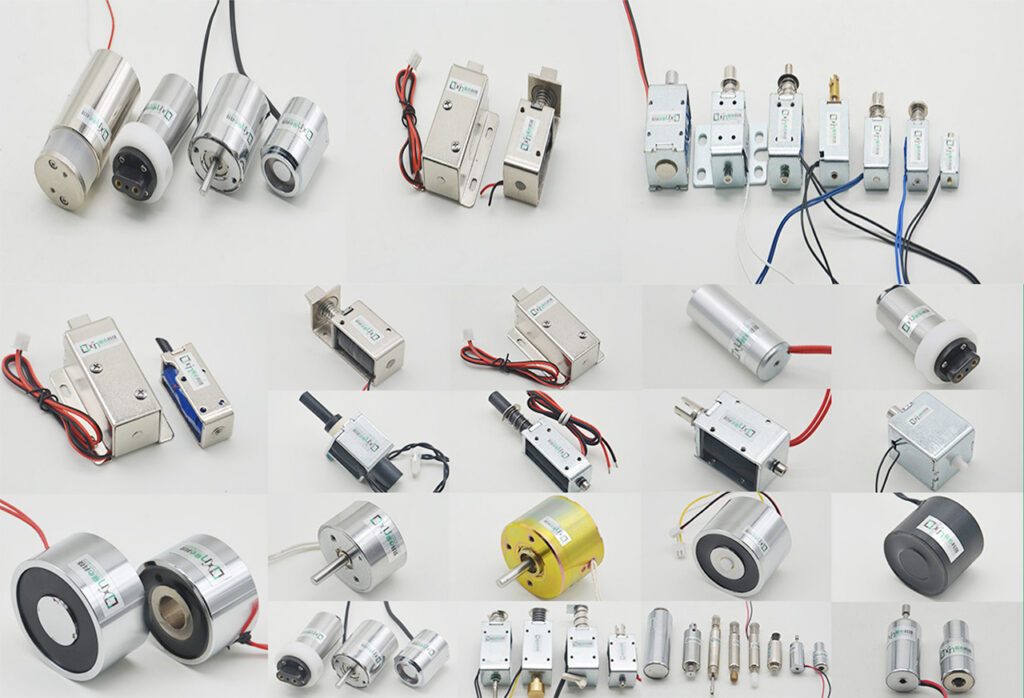
How a DC solenoid turns current into linear motion: coil, plunger, pole piece and return spring explained, with the formulas that set force and stroke.