Here’s a truth I’ve learned after years in this industry: the components you pick are only as good as the supplier standing behind them. Electromagnets and solenoids might be tiny — some weigh less than 50 grams — but when one fails on an automated assembly line, a bottling plant, or a surgical device, the real cost goes way beyond the part. We’re talking downtime, product loss, and reputational damage that makes the component price look like pocket change.
If you’re an automated equipment manufacturer, choosing the right electromagnet supplier isn’t just a procurement exercise. It’s an engineering partnership — one that directly shapes your product performance, supply chain resilience, time-to-market, and long-term competitive edge. And yet, I still see too many OEMs and contract manufacturers treating supplier selection like ordering commodity hardware. You know the drill: comparing unit prices on a spreadsheet, then defaulting to the lowest bidder.
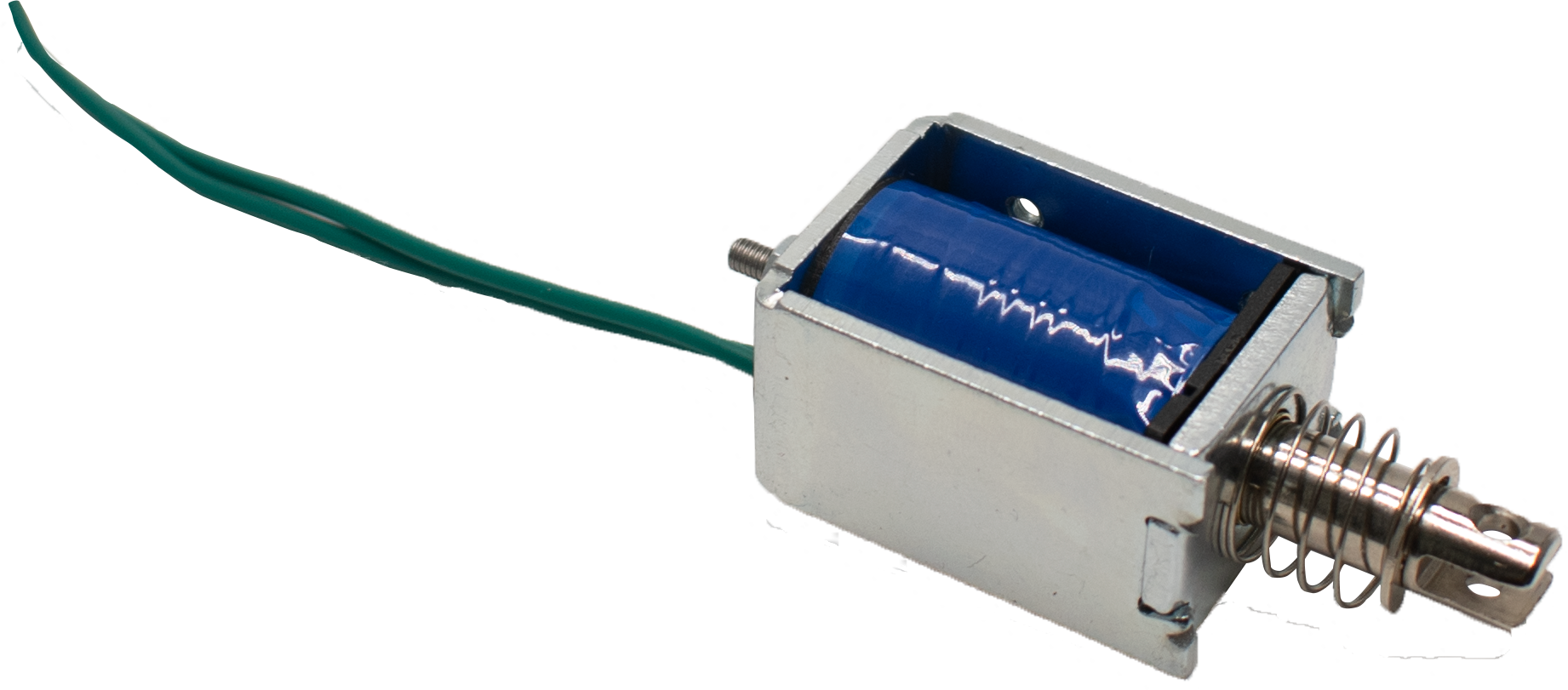
This guide takes a different approach. Whether you’re specifying a push-pull solenoid for a smart lock, a latching electromagnet for a vending machine, a tubular solenoid for an automated door lock, or a custom-wound coil for a medical device, we’re going to walk through seven decision frameworks that separate the world-class electromagnet suppliers from everyone else.
Why Your Electromagnet Supplier Choice Matters More Than You Think
Here’s what makes electromagnets different from most other components you’ll buy for an automated system. A bearing or a fastener is fairly straightforward — but an electromagnet’s performance depends on a precise interplay between magnetic circuit design, electrical parameters, mechanical construction, and thermal management. Get one thing slightly off — wire gauge, core material, coil winding density — and the holding force can shift by 20–40%. That’s enough to crater your entire system.
This really hits home in precision automation applications, where force, stroke, response time, and repeatability are specced within tight tolerances. Think about it: a push-pull solenoid operating at a 10ms response time in a high-speed sorting system, versus one running at 100ms in a slow-access vending machine. The supplier who can consistently hit that 10ms across production batches — with less than 5% variance — is worth dramatically more than one whose units drift from 8ms to 25ms. Even if the second supplier is 30% cheaper per unit. Trust me, you get what you pay for.
The Seven Frameworks for Evaluating an Electromagnet Supplier
Framework 1: Engineering Capability and Customization Depth
Let’s start with the single most important distinction between electromagnet suppliers: are they a catalog-only distributor, or a genuine custom electromagnet manufacturer? Catalog folks sell standardized parts off the shelf. Custom manufacturers design and build parts to your exact specs.
For automated equipment manufacturers, customization isn’t usually optional — it’s practically a requirement. Your force requirement, stroke, voltage, duty cycle, mounting configuration, environmental conditions, and connector type? They’ll almost never match an off-the-shelf part perfectly. (We’ve learned this the hard way more times than I’d like to admit.)
What to evaluate:
- Does the supplier have in-house magnetic circuit design engineers, or do they rely on third-party design support?
- Can they provide FEA (Finite Element Analysis) simulations of the magnetic circuit before tooling?
- What’s their minimum order quantity (MOQ) for custom parts — and does it align with your prototyping and production volumes?
- Do they offer free or low-cost design reviews for custom electromagnet projects?
- Can they handle custom coil winding, core machining, housing fabrication, and connector integration all in-house?
Red flags: Watch out for suppliers who won’t share design files, who try to push their standard dimensions without any engineering justification, or who take more than 3–5 business days to respond to custom RFQs with actual technical detail.
Best practice: Here’s a tip — request a design feasibility review as your very first technical interaction with a new supplier. A capable manufacturer will ask detailed questions about your application, confirm key parameters, and provide a written design proposal. And in many cases, they’ll do it at no charge for qualified projects.
Framework 2: Quality Management System and Certifications
In industrial automation, quality isn’t about catching defects after the fact — it’s about preventing them in the first place. The quality management system (QMS) your supplier operates under tells you a lot about their defect rates, traceability, and ability to meet your industry’s regulatory requirements.
What to evaluate:
- ISO 9001:2015 is the baseline — the absolute minimum for any manufacturing supplier. It shows they’ve got a documented QMS, internal audits, and continuous improvement processes in place.
- ISO 13485 is non-negotiable if you’re in medical devices and your solenoids need to serve that market.
- IATF 16949 — that’s your go-to for automotive automation suppliers.
- CE, UL, and RoHS compliance — make sure your electromagnets carry the certifications your target markets demand.
What to request:
- First Article Inspection Reports (FAIRs) with every new custom order
- Certificate of Conformance (CoC) for every production lot, traceable all the way back to raw material lot numbers
- Process Capability Indices (Cpk) for critical dimensions — you want a Cpk of 1.33 or higher
- Full material traceability — the supplier should be able to trace every electromagnet back to the raw material lot within 24 hours. No excuses.
Framework 3: Manufacturing Capability and Production Scale
You might find a supplier with fantastic engineering chops but limited production capacity — or the other way around. Either scenario can blindside you when your orders start scaling up. I’ve seen it happen.
What to evaluate:
- Winding technology: Automated servo-controlled winding produces far more consistent electromagnets than manual winding
- Core manufacturing: In-house core machining means tighter tolerances on magnetic gap dimensions
- Assembly and testing: 100% functional testing is absolutely non-negotiable for safety-critical applications
- Production capacity: A supplier running at 95%+ capacity during your production ramp is a supply chain risk you don’t want
- Lead time vs. inventory strategy: Can they offer finished-goods buffer inventory for your top-run SKUs?
Framework 4: Material Sourcing and Supply Chain Resilience
The raw materials that go into an electromagnet — copper magnet wire, electrical steel for the core, housing materials, and permanent magnet materials (for latching solenoids) — are all subject to commodity price swings and supply disruptions. And those disruptions have a nasty habit of hitting at the worst possible moment.
What to evaluate:
- Do they source wire and core materials from multiple qualified suppliers?
- Can they provide dual-certified (UL + IEC) magnet wire?
- What’s their buffer stock policy for long-lead raw materials?
- What’s their price adjustment mechanism when commodity costs go up?
Supply chain resilience questions to ask:
- What percentage of their electromagnet components are manufactured in-house versus outsourced?
- Do they have a business continuity plan with alternative production facilities?
- Have they experienced major supply disruptions in the past 3 years, and more importantly — how did they handle them?
Framework 5: Application Engineering Support and Technical Documentation
The best electromagnet suppliers out there function as an extension of your engineering team — not just vendors you place orders with. Application engineering support is really what separates the commodity sellers from the true strategic partners.
What to evaluate:
- Pre-sales technical consultation: Can they help optimize your electromagnet spec before you even place an order?
- Prototyping and sampling: Do they offer rapid prototyping with lead times of 1–2 weeks for initial samples?
- Performance validation: Will they test your actual application conditions and hand over written test reports?
- Technical documentation package: Dimensional drawings, electrical specs, magnetic force vs. stroke curves, environmental ratings — the whole package
Framework 6: Delivery Performance and Logistics Capability
Let me be blunt: in automated equipment manufacturing, production schedules don’t forgive. A solenoid that shows up 2 weeks late can stop an entire assembly line cold. So delivery performance isn’t just a metric — it’s a direct operational risk.
What to evaluate:
- On-time delivery rate: 95%+ on-time delivery should be standard for any qualified supplier
- Logistics capabilities: Do they handle international shipping, customs documentation, and Incoterms smoothly?
- Order management system: Online portal for tracking orders and ASN transmission
- Expediting capability: Can they reliably deliver within 3–5 business days for urgent replenishment?
Supply chain risk mitigation:
- Safety stock agreements: Negotiate minimum safety stock levels for your top 3 SKUs
- Dual-sourcing strategy: Qualify a backup supplier even if it means slightly higher unit costs. It’s insurance you’ll be glad you have.
Framework 7: Total Cost of Ownership Beyond Unit Price
Here’s something a lot of people miss: the unit price of an electromagnet is typically only 30–50% of its total cost of ownership (TCO). The rest? It’s buried in quality failures, logistics headaches, engineering support, inventory carrying costs, and the expensive consequences of design changes when parts don’t perform as advertised.
Hidden TCO components:
- Incoming inspection costs: Higher-defect parts eat up more inspection resources
- Assembly line downtime: A failed solenoid on an automated line costs $5,000–$50,000 per hour. Let that sink in.
- Rework and returns: A supplier with poor process control generates warranty returns that eat your margins
- Inventory buffer costs: An unreliable supplier forces you to carry extra safety stock — and that costs money
- Design change costs: A proactive supplier eliminates these through upfront validation, saving you the headache
How to Structure Your Supplier Evaluation Process
Phase 1: Requirements Definition (Week 1–2)
Before you reach out to a single supplier, document everything in a comprehensive RFQ package: electromagnetic specs, mechanical specs, quality and certification requirements, volume forecasts, delivery requirements, and technical documentation needs. Get it all down on paper.
Phase 2: Supplier Identification and Pre-Screening (Week 2–3)
Identify 5–8 potential suppliers through industry directories (ThomasNet, GlobalSources, Made-in-China), trade shows (Automation Expo, Hannover Messe, Electronica), and online B2B platforms with verified manufacturer status. Cast a wide net, then narrow it down.
Phase 3: Technical Evaluation (Week 3–5)
Request samples from 3–4 shortlisted suppliers. Do rigorous incoming inspection and application testing. Score each supplier against all seven frameworks — be systematic about it.
Phase 4: Commercial and Production Evaluation (Week 5–8)
Issue RFQs to your top 2–3 candidates. Negotiate pricing, lead times, payment terms, and tooling ownership. Validate production capability through a factory audit or video inspection before you commit.
Phase 5: Pilot Production and Qualification (Week 8–12)
Run pilot production with your selected supplier. Track quality metrics, delivery performance, and engineering responsiveness closely. Formally qualify the supplier before giving the green light for full production release.
Key Questions to Ask Every Electromagnet Supplier
Engineering & Design:
- Do you have in-house magnetic circuit design engineers? Can you share design FEA simulations?
- What’s your minimum order quantity for custom electromagnets?
- Can you provide a free design feasibility review before we commit to tooling?
- What’s your standard prototype lead time for custom parts?
- Do you provide magnetic force vs. stroke curves for every part you ship?
Quality & Compliance:
- What quality management system do you operate under?
- Can you provide ISO 9001, ISO 13485, or IATF 16949 certificates?
- Do you provide First Article Inspection Reports with every new part?
- What’s your incoming defect rate (PPM) for the past 12 months?
- Are your products RoHS and REACH compliant?
Manufacturing & Supply:
- What percentage of your production is done in-house versus outsourced?
- Do you perform 100% functional testing on every single unit?
- What’s your maximum monthly production capacity?
- Do you maintain raw material buffer stock? For how many weeks?
- Can you provide dual-sourcing or redundant tooling for critical parts?
Commercial & Logistics:
- What are your standard payment terms?
- Do you offer price locks for annual volumes?
- What’s your on-time delivery rate for the past 12 months?
- Can you support EDI or API-based order integration?
- What are your standard and expedited lead times?
Common Mistakes in Electromagnet Supplier Selection
Mistake 1: Choosing on Price Alone
Look, the cheapest electromagnet supplier is almost never the cheapest over the full product lifecycle. Quality variance, unreliable delivery, and gaps in engineering support — they all compound into serious operational costs down the line.
Mistake 2: Accepting Standard Parts Without Application Validation
Buying a catalog solenoid that’s “close enough” to your requirement is a gamble. If the holding force comes in 15% below what you actually need because the core’s undersized, you’ll be dealing with high early-life failure rates. I’ve seen it happen more times than I can count.
Mistake 3: Skipping the Sample Phase
Never — and I mean never — go from RFQ straight to mass production without validating samples in your actual application. Lab datasheet performance and real-world performance can be very different animals.
Mistake 4: Ignoring Tooling Ownership
Who owns the tooling for your custom electromagnet? It’s a simple question with expensive consequences if you don’t sort it out upfront. Negotiate clear tooling ownership terms in your supply agreement to avoid getting stuck with excessive fees if things go south.
Mistake 5: Not Planning for End of Life
Here’s one nobody thinks about until it’s too late: negotiate minimum 5-year product continuity commitments and a structured end-of-life notification process (12 months minimum). Otherwise, you’re looking at costly requalification when a supplier decides to discontinue a part you rely on.
How CX Solenoid Helps Automated Equipment Manufacturers
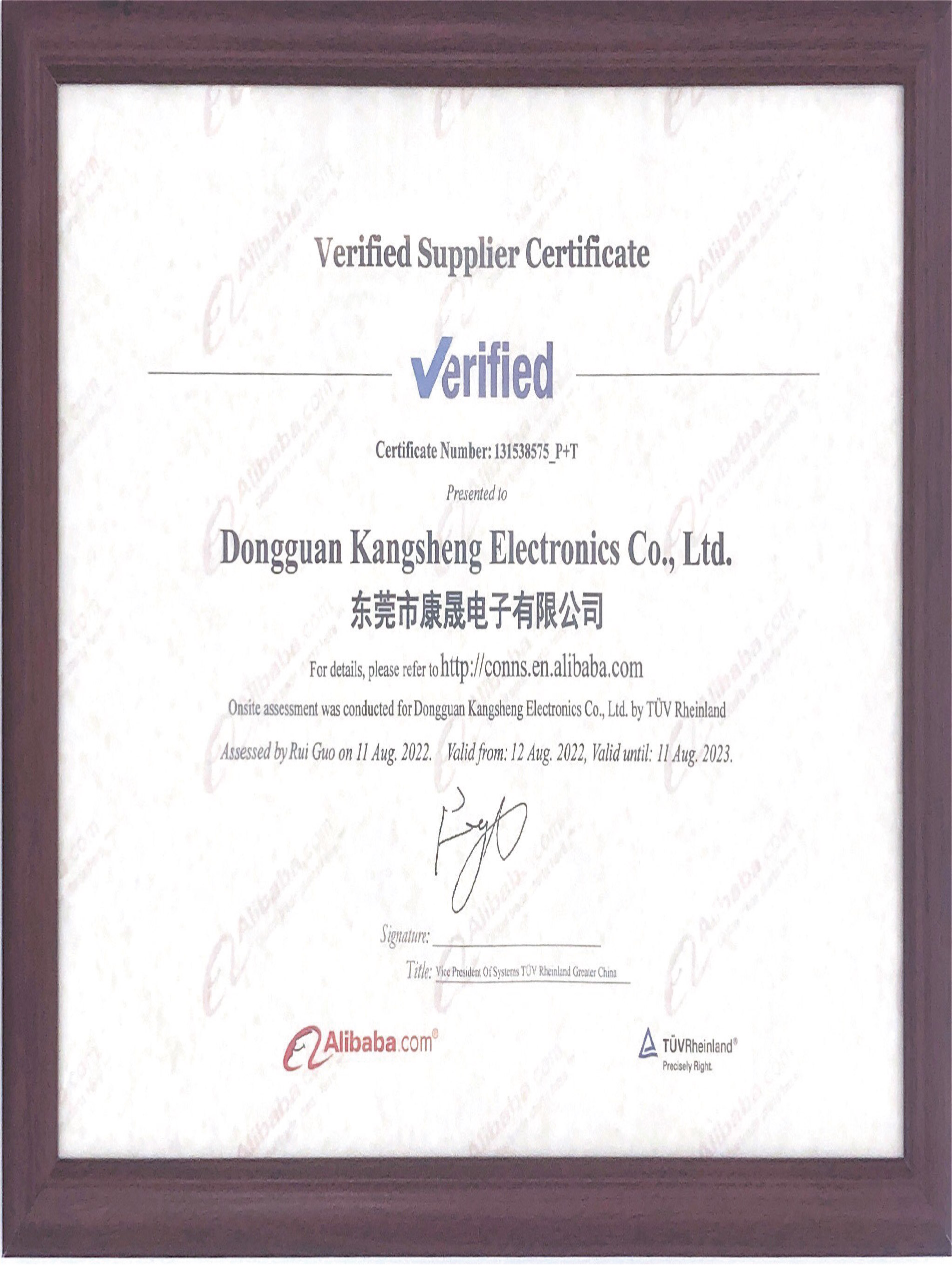
At CX Solenoid (Cixin Industrial), we’ve spent over a decade helping automated equipment manufacturers around the world solve their toughest electromagnet application challenges. Our vertically integrated manufacturing operation in Dongguan, China, covers the complete production lifecycle — from magnetic circuit design and FEA simulation all the way through coil winding, core machining, assembly, and 100% functional testing.
We serve OEM customers in:
- Smart lock and access control — tubular solenoids and latching solenoids with IP67 ratings
- Automated packaging and sorting — high-speed push-pull solenoids with response times under 15ms
- Medical and laboratory automation — ISO 13485-compliant solenoids for diagnostic and therapeutic equipment
- Industrial valve and fluid control — robust solenoid valves for harsh environment automation
- Transportation and EV charging — custom electromagnet assemblies for EV charging infrastructure and railway door systems
Our engineering team offers free design feasibility reviews for custom electromagnet projects. We typically deliver first prototypes within 10 business days, and we keep strategic buffer inventory for all active OEM programs.
If you’re looking for an electromagnet supplier who treats your engineering challenges like their own, contact our team today. We’ll review your requirements and respond within 1 business day.
Conclusion: Make Supplier Selection a Strategic Decision
Here’s the bottom line: choosing the right electromagnet supplier is one of the most consequential decisions you’ll make in automated equipment development. A great supplier reduces your total cost of ownership, accelerates your time-to-market, and gives your engineering team a real competitive edge. A poor supplier? They create cascading problems across quality, delivery, and cost that compound over the life of your product.
Use the seven frameworks in this guide — engineering capability, quality management, manufacturing scale, material sourcing, application support, delivery performance, and total cost of ownership — as your structured evaluation criteria. Apply them consistently to every supplier candidate, including your current incumbent.
The ROI of rigorous supplier selection is immediate, and it compounds. Every percentage point improvement in incoming quality, every week saved in prototype lead time, every supply disruption avoided — that’s competitive advantage that multiplies across your product portfolio and customer base.
Start your evaluation process today. The electromagnet supplier you choose now will shape the reliability and competitiveness of your automated equipment for years to come.