Here’s the thing — electromagnets are doing a lot more heavy lifting in modern healthcare than most people realize. From the insulin pump keeping a diabetic patient’s blood glucose in check to the surgical robot executing procedures at sub-millimeter precision, electromagnetic technology is the backbone of the force control that keeps people alive. At CX Solenoid, we design and engineer custom solenoid and electromagnet solutions specifically for medical device manufacturers. In this article, let’s look at three areas where electromagnets genuinely make the difference between a good outcome and a life-saving one.
Case 1: Insulin Pumps — Precision Drug Delivery with Micro Solenoid Valves
Managing type 1 diabetes means dealing with insulin around the clock. Insulin pumps have largely taken over from traditional injections — they use what’s called continuous subcutaneous insulin infusion (CSII), and honestly, they’ve given patients a level of freedom and glucose control that was hard to imagine just a couple of decades ago. Nestled inside every insulin pump is a micro solenoid valve, and it’s this little component that governs exactly how much insulin flows from the reservoir to the patient.
Here’s how it works in practice: when the pump’s processor calls for a dose, an electromagnetic coil inside the micro solenoid energizes, pulling a precision plunger that opens the flow path for insulin. Cut the current, and a spring snaps the plunger back to its closed position — shutting off the flow with sub-microliter accuracy. (That’s incredibly tiny, by the way.) The thing is, this on/off cycling can happen hundreds of times a day, so the demands on the solenoid’s lifecycle, response speed, and power efficiency are nothing to sneeze at.
CX Solenoid’s miniature push-pull solenoid series is purpose-built for portable medical devices where space, weight, and power consumption are all brutally constrained. Our micro solenoids run at 3V–6V with response times under 10ms, which makes them a natural fit for the rapid, precise dosing that insulin delivery systems demand.
Now, the real engineering headaches here? Three come to mind. Biocompatibility — the solenoid has to work inside a device that’s sitting against the user’s skin. Noise — patients are wearing these things 24/7, so the quieter the better. And power draw — every milliwatt matters when you’re trying to stretch battery life. CX Solenoid tackles all three through custom alloy cores, hermetic sealing, and coil winding that’s been optimized for those tight portable power budgets.

Case 2: Surgical Robots — Electromagnetic Actuators for Precision Motion Control
The da Vinci surgical system and platforms like it have genuinely reshaped what’s possible in the operating room. Surgeons can now perform incredibly complex procedures through tiny incisions — we’re talking about precision that was barely imaginable a generation ago. At the heart of every surgical robot arm sit electromagnetic actuators, and they’re the ones translating the surgeon’s hand movements into precise mechanical motion at the instrument tip.
Surgical robots need actuators that can deliver serious torque in a compact package, operate with near-zero backlash, and hold their position accurately even as loads shift. That’s a tall order, and electromagnetic solenoids and voice-coil actuators happen to deliver exactly that combination. In the instrument wrist mechanisms, solenoid arrays handle the fine articulation needed for tissue manipulation, suturing, and energy delivery (things like cautery and ultrasound).
Safety, of course, is non-negotiable. Every actuator in a surgical robot has to fail predictably — what engineers call fail-safe design. This is actually one area where electromagnetic actuators shine. Unlike pneumatic systems, they can hold position without drawing continuous power (thanks to permanent magnet latching solenoids), and they can be engineered to return to a safe default position the moment power is lost.
CX Solenoid’s engineering team collaborates directly with medical robotics companies to develop custom latching solenoid actuators that comply with IEC 60601-1 medical electrical safety standards. Our actuators go through accelerated lifecycle testing that’s been pushed well beyond 10 million cycles, thermal cycling validation ranging from -20°C to +60°C, and rigorous EMI/EMC testing to make sure they play nicely with the robot’s sensor systems.

Case 3: MRI Machines — Gradient Coil Solenoids for Diagnostic Imaging
Magnetic Resonance Imaging (MRI) produces the highest-resolution soft tissue images in modern diagnostics — and here’s the clever part — it does all of that using nothing but powerful magnetic fields and radio waves, with no ionizing radiation involved. The gradient coil system is one of the most electromagnetically demanding components in an MRI machine. It’s what spatially encodes the MRI signal so the scanner can piece together a 3D picture of the patient’s anatomy.
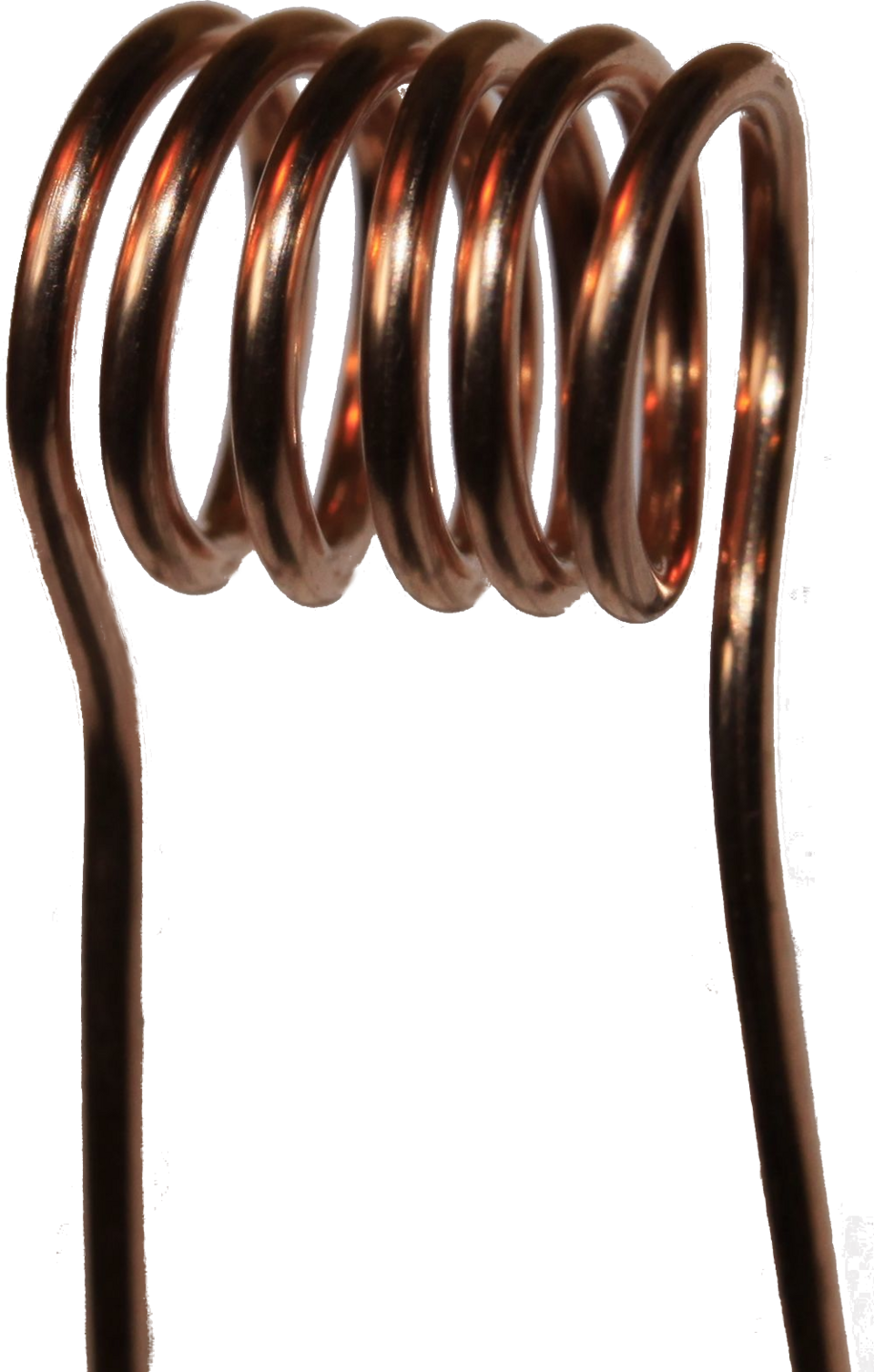
In essence, gradient coils are large, precision-wound solenoid electromagnets. When they’re energized in specific patterns, they generate a linearly varying magnetic field that lets the MRI system selectively excite and pick up signals from different slices of tissue. The performance requirements are, frankly, extreme: gradient coils have to switch field strengths of 30–100 mT/m in milliseconds, with sub-millisecond rise times, all while keeping field linearity — that is, uniformity within 1% across the entire imaging volume — rock solid.
The mechanical forces that come with fast switching are no small thing either. A rapidly changing magnetic field induces eddy currents in nearby conductive structures, which creates both heat and mechanical stress. So gradient coil design has to thread the needle between electromagnetic performance and structural integrity. CX Solenoid’s custom solenoid winding services help medical imaging OEMs develop gradient coil assemblies that strike that balance.
Gradient coils aren’t the only place solenoids show up in MRI systems, either. They’re also used in patient comfort systems (targeted heating), console controls (push-button solenoids), and cryostat cooling management. And as MRI technology pushes toward higher field strengths — 7T and even 10T clinical systems — the electromagnetic engineering challenges scale right along with it.
Why Medical Device Manufacturers Choose CX Solenoid
The medical device industry doesn’t really tolerate off-the-shelf components — and understandably so. Every solenoid or electromagnet in a regulated medical device has to be traceable, validated, and fully documented under quality management systems like ISO 13485. CX Solenoid maintains a complete quality management system that includes full material traceability, first article inspection reports, and a Certificate of Conformance for every custom part that leaves our facility.
What does our engineering capability actually look like? Here’s a quick rundown:
- Custom magnetic circuit design and FEA simulation for force optimization
- Miniaturization engineering for portable and implantable device applications
- Biocompatible material selection and surface treatment
- Accelerated lifecycle testing and failure mode analysis
- Regulatory documentation support for 510(k) and CE Mark submissions
Whether you’re building the next generation of wearable drug delivery systems, pioneering new surgical robotics, or pushing the boundaries of diagnostic imaging, CX Solenoid has the engineering depth and manufacturing chops to be your solenoid development partner.
Partner With CX Solenoid for Your Medical Device Project
Every medical application kicks off with a conversation about your specific force, stroke, size, power, and lifecycle requirements. Our engineering team offers free preliminary design reviews for qualified medical device projects. Get in touch with us today to talk through your electromagnet requirements — we’d love to hear about what you’re working on.