Here’s the thing — the global medical device industry is in the middle of a pretty massive shift, driven by electrification, miniaturization, and tighter precision control than ever before. And at the center of it all is a technology that’s been around for nearly 200 years: the electromagnet. It’s almost poetic, really. The same basic principle that powered early telegraph systems is now doing things like delivering life-saving insulin with milligram-level accuracy, and helping surgical robots perform procedures that human hands simply can’t manage. That’s what modern healthcare looks like, and electromagnets are a big part of why.
If you crack open a single mid-range medical device, you’ll often find anywhere from 10 to 30 solenoid components packed inside — each one doing something critical, whether it’s managing fluid flow, actuating valves, controlling positioning, or keeping safety interlocks in check. For medical device OEMs and procurement engineers out there, getting a solid handle on how and where these components are used isn’t just nice to know — it’s essential for picking the right part for the job.
In this article, we’re going to dig into three real-world case studies of electromagnet use in medical devices: insulin pumps for managing diabetes, surgical robotics where precision is everything, and MRI systems — where the electromagnet isn’t just a component, it’s basically the whole device. We’ll also walk through the regulatory and quality standards these parts have to meet. No shortcuts on that front.
Case Study 1: Insulin Pumps and Wearable Drug Delivery Systems
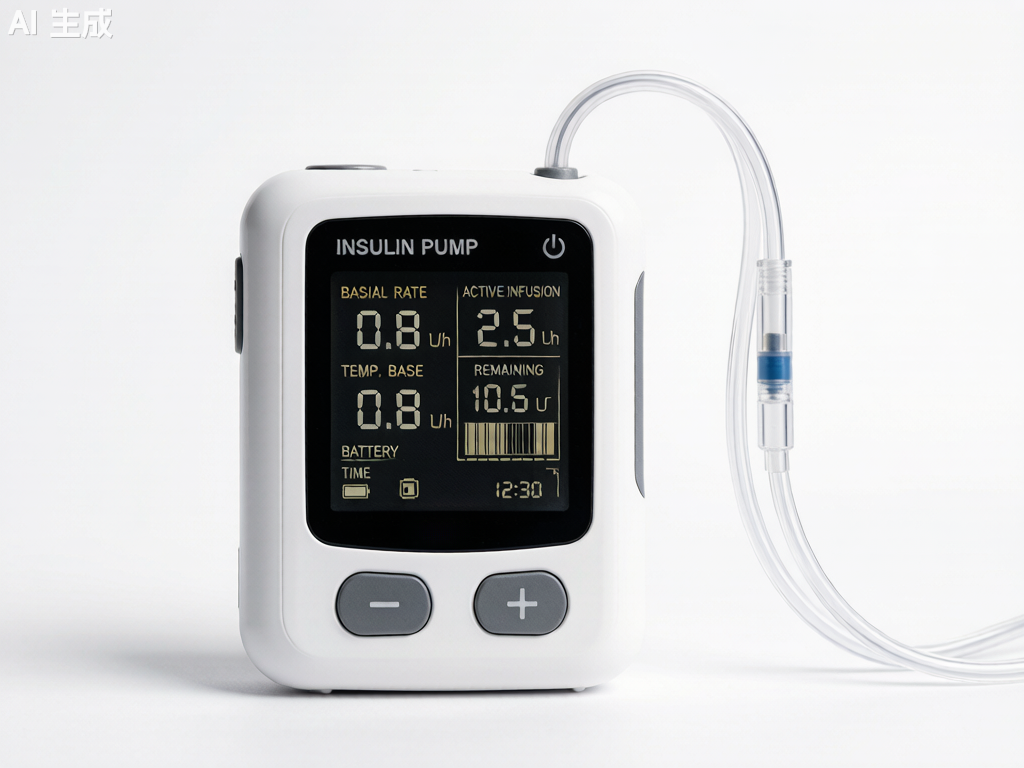
Insulin pumps are compact, programmable devices that continuously deliver insulin to patients with Type 1 or Type 2 diabetes — and honestly, they’re one of the most demanding applications you’ll find for miniature solenoid tech. The tolerances these things operate under are staggering.
Inside a typical pump, multiple solenoid valves work together to precisely route insulin from a reservoir, through an infusion set, and into the patient’s subcutaneous tissue. Here’s where the solenoids really pull their weight:
- Micro-dosing valves: These things control insulin delivery down to increments as tiny as 0.025 units per dose — which means the solenoid valve has to be repeatable within 1% across 50,000+ actuation cycles. You read that right. Fifty thousand.
- Occlusion sensors: They detect blockages in the infusion line by measuring back-pressure, and a tiny solenoid mechanism is what confirms that flow is actually continuous. It’s a small thing, but it could save someone’s life.
- Reservoir locking mechanism: Keeps the insulin cartridge locked in place during use. The clever part? A bistable solenoid holds the latch locked without drawing any power at all once it’s set.
- Cannula insertion assist: Some of the more advanced pumps out there use a solenoid-driven mechanism that automatically inserts the infusion cannula at the press of a button — no manual insertion needed.
The design bar here is extremely high. The pump has to run reliably for 3 to 5 days on a single charge, be waterproof (IPX7 or better — think showering, swimming), and operate silently so it doesn’t wake someone up at night. Bistable (or latching) solenoids are especially popular in this space because they only draw power during state transitions — not while just holding a position. That’s how you get multi-day battery life in a device smaller than a smartphone.
Why this matters for sourcing: Suppliers building insulin pump solenoids need to prove biocompatibility (that’s ISO 10993), show cleaning validation for drug-contact materials, and demonstrate they’ve got high-volume production chops with single-piece traceability. Custom solenoid manufacturers with actual medical device experience can often provide pre-validated component families — and that can shave months off the certification timeline for pump OEMs.
Case Study 2: Surgical Robotics — Precision Beyond Human Limits
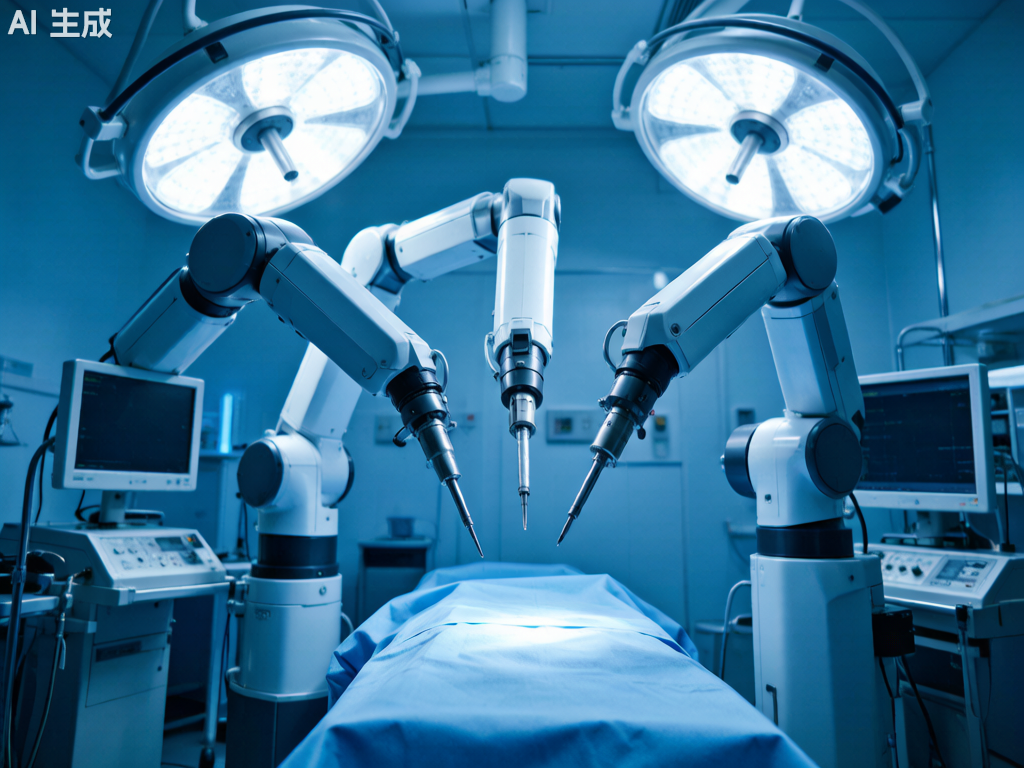
Surgical robotic systems — the da Vinci platform being the most famous example — have completely reshaped what’s possible in the operating room. Surgeons can now perform complex procedures through incisions smaller than 1 cm, with hand tremor filtered out and a wrist that can articulate a full 540 degrees. (If you’re wondering, that’s way more than any human wrist can do.) Electromagnets and solenoid valves are woven throughout these systems, making a lot of this possible.
When it comes to surgical robotic end-effectors, electromagnetic actuation is what delivers the precise, reversible control that mechanical or hydraulic systems just can’t match:
- Wrist articulation motors: Each robotic wrist joint relies on micro-solenoids or voice-coil actuators for fine angular positioning. A typical endoscope manipulator, for instance, has 6 degrees of freedom — all driven by electromagnetic actuators. Every single one of them has to be right.
- Gripper and cutting tool control: Electromagnets actuate scissors, graspers, and cauterizing instruments, controlling force output anywhere from 5N to 50N depending on the procedure. The range matters — you need gentleness in some places and cutting power in others.
- Clutch/release mechanisms: Surgeons need to quickly detach and reattach instrument arms mid-procedure. That means electromagnetic latches that can engage and disengage reliably under load — every single time, no exceptions.
- Energy delivery systems: Electrosurgical instruments (cautery, ablation) use solenoid-controlled switching to regulate energy delivery with real precision. Getting this wrong isn’t an option.
And it’s not just the robot itself. Support equipment like insufflation systems — the ones that maintain patient cavity pressure during laparoscopic surgery — depend on solenoid valves to control CO2 flow rates, and they have to respond in under a second. A single insufflator can pack 6 to 8 solenoid valves managing pressure in the 5–20 mmHg range.
The regulatory landscape for surgical robotics is about as demanding as it gets in medicine. Every electromagnet component has to be certified to IEC 60601-1 (medical electrical equipment safety) and often IEC 60601-1-2 (electromagnetic compatibility) as well. That EMC standard is especially tricky for solenoid coils — they’re generating electromagnetic fields that could interfere with other gear in the OR, and nobody wants that.
Case Study 3: MRI Machines — Where the Magnet IS the Device
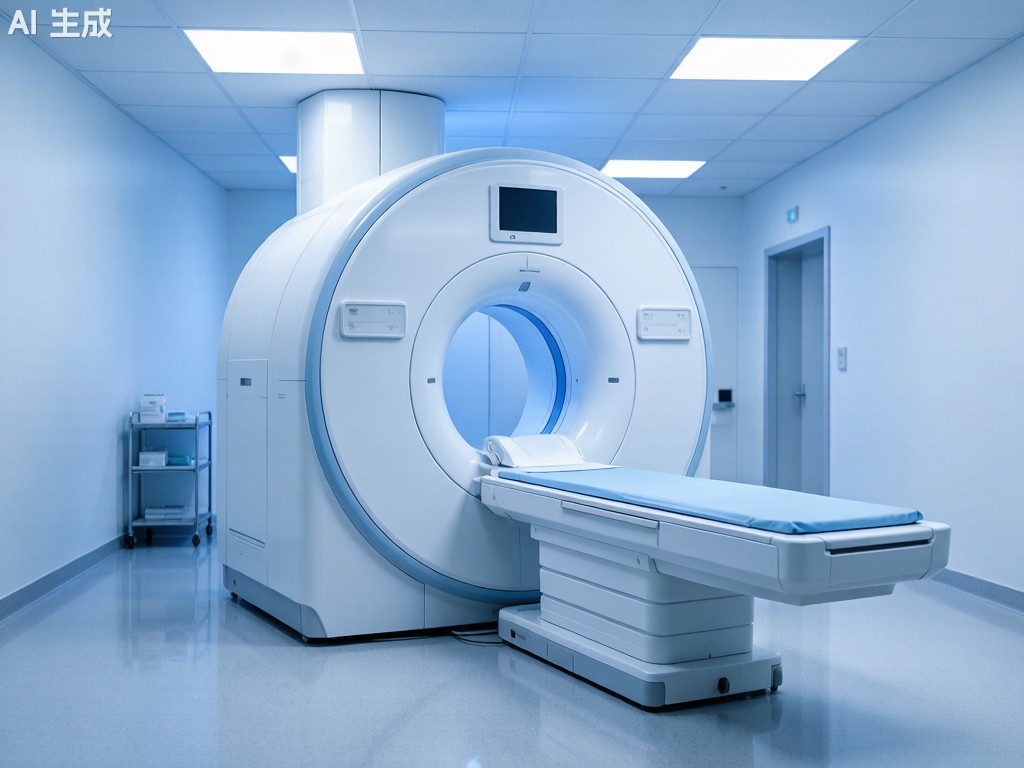
Here’s where things get really dramatic. Magnetic Resonance Imaging is the most striking example of electromagnet use in medical devices — because in an MRI scanner, the main magnet is the device. We’re talking about machines that typically generate field strengths of 1.5T to 7.0T. For reference, the Earth’s magnetic field? That’s about 0.00005T. So you’re looking at a field that’s 30,000 to 140,000 times stronger. Let that sink in for a second.
But the main magnet is just the start. MRI systems also contain dozens of additional solenoid components doing critical work:
- Gradient coils: These are rapidly switching electromagnets that nudge the main field into controlled patterns to encode spatial information. They have to flip on and off in under 1 millisecond, generating forces of thousands of Newtons. That requires precisely wound, epoxy-impregnated coil assemblies — tolerances are measured in fractions of a millimeter.
- Active shielding solenoids: Counter-wound electromagnets that keep the gradient field contained inside the scanner bore. Their job is to prevent interference with surrounding equipment and maintain magnet homogeneity — both of which are essential for getting a usable image.
- Patient comfort systems: Sounds ironic, but MRI scanners need patient comfort systems. Solenoid-controlled air valves manage the built-in fans that reduce the acoustic noise from gradient switching. And yes, that noise can hit 130 dB without mitigation — that’s louder than a jet engine taking off.
- Table positioning drives: Linear solenoid actuators handle fine adjustment of the patient table inside the bore, with positioning accuracy under 0.5 mm. It doesn’t sound like much, but in diagnostics, half a millimeter matters.
- Emergency degaussing systems: Solenoid-driven mechanisms that handle controlled magnet ramp-down when things go sideways — which is a non-negotiable safety feature.
The tolerances here are frankly extraordinary. Gradient coil wire placement has to be accurate down to fractions of a millimeter. The main magnet windings have to keep cryogenic temperatures (usually around 4.2K with liquid helium) while handling current flows exceeding 500A. Any flaw in the coil winding or insulation — even a small one — can cause thermal runaway or field inhomogeneity that renders the whole system useless for diagnosis.
Regulatory Standards Every Medical Device Solenoid Must Meet
No matter what the application is, any solenoid component intended for medical use has to clear the same basic set of regulatory and quality hurdles:
| Standard | Scope | Key Requirement |
|---|---|---|
| ISO 13485 | Quality Management | Design, development, production, and service of medical devices |
| IEC 60601-1 | Electrical Safety | Protection against electrical shock, mechanical, thermal, and fire hazards |
| IEC 60601-1-2 | EMC | Electromagnetic compatibility — emissions and immunity |
| ISO 10993 | Biocompatibility | For components in contact with body fluids or tissue |
| IEC 62368-1 | Safety of AV Equipment | Required for monitoring devices that include solenoids |
The Opportunity for Electromagnet Manufacturers
The market drivers are strong: aging populations, more people living with chronic diseases, and healthcare going digital are all pushing double-digit growth in medical device markets worldwide. For electromagnet manufacturers, the medical segment is attractive for a few reasons — better margins than industrial or consumer products, long product lifecycles (medical devices typically stay in production for 10–15 years, which means stable, predictable demand), and growing demand for customization as device OEMs try to differentiate with proprietary actuation solutions.
China’s electromagnet manufacturing industry has some real advantages here. There’s deep expertise across all the major solenoid types — push-pull, rotary, latching, proportional — plus the ability to scale production while keeping prices competitive. And quality management systems are getting more sophisticated all the time, with more shops meeting international standards.
The main challenge? Proving regulatory compliance and building a validated quality management system from the ground up. But for manufacturers willing to put in that work — to invest in ISO 13485 certification and IEC 60601-1 testing — the medical device market is a high-value segment with loyal customers and strong growth ahead.
Cixin Industrial is a professional custom solenoid and electromagnet manufacturer based in Dongguan, China, serving medical device, automotive, and industrial clients in 30+ countries. We offer custom design, prototyping, ISO-compliant production, and global logistics for medical-grade solenoid applications. Contact our engineering team to discuss your medical device solenoid requirements.